How to Start a Reading Habit: A 30-Day Plan

Most reading habit advice starts at the wrong number. Twenty minutes a day sounds modest, but it assumes a reading slot already exists in your routine, plus a book you actually want to open, plus the attention span for 20 uninterrupted minutes. Starting from zero, you probably have none of those. The plan below starts at one page. Not ten. One. Week one has a smaller job than reading: build the trigger-response-reward loop with so little friction that the habit fires before motivation gets a vote.
The pattern you already know
There's a specific failure loop with reading, and it plays out nearly the same way every time. You buy the book, genuinely excited about it, and get through 30 or 40 pages the first weekend - maybe more, because it's new and you have time and it feels good. Then work picks up, or the week runs long, and the book sits untouched for five days. By day six the thread is gone - you can't quite remember where you were or why you cared about that character's problem - and reopening the book now takes a mental effort that watching something doesn't. So you watch something. The book goes on the shelf.
I've owned probably 40 books I haven't read. At some point the shelf becomes aspirational interior design.
Book clubs rarely fix this. Neither do Goodreads reading challenges. Both set a target that quietly assumes a functioning daily reading habit is already in place. A 24-books-a-year challenge works out to two books a month, which means 30-45 minutes of daily reading - a perfectly reasonable pace if you already have the slot. If you don't, you fall behind in month one and feel vaguely guilty about it, and somewhere around month three you stop checking your Goodreads progress at all.
Two things need to exist before the habit can form. One is a consistent daily slot, some corner of the day that's already quiet and already yours - the last ten minutes before sleep, the train, the chair where the coffee happens. The other is a book interesting enough to pull you back on a tired Wednesday. Neither of those is a discipline question. They're setup questions, and most advice skips them entirely.
Why most attempts fail
The first killer is starting at the wrong amount. Twenty minutes sounds like nothing until you try to carve it out of a real day, and for someone who hasn't read regularly in years it's a genuinely substantial ask - a real chunk of undistracted attention, not just a gap in the calendar. That's a lot to ask of a habit that doesn't exist yet. One page takes about 90 seconds, and you always have 90 seconds, which is the whole trick: the standard excuse for skipping never gets a chance to apply.
The second killer is the book itself, and it takes down more reading habits than any other single factor. The Pulitzer winner gathering dust on your shelf is for later. Right now you want the thing where you need to know what happens next, even if it's a thriller you'd be mildly embarrassed to mention at a dinner party. The habit installs in the first 30 days, and once it's running you can graduate to whatever you like. Choosing "good" books before then is like signing up for a competition in the first week of a workout routine.
And then there's the slot problem. Reading whenever you have time means reading never - some more immediate and more entertaining thing wins that contest every single evening. It has to be one specific slot, defended against everything else that wants it. Before sleep, after the morning coffee, on the commute, whichever, but the same one every day, so the book always knows where to find you.
The plan
Pick one slot - before bed is the most reliable, though commute or after-coffee both work - and set a phone alarm for it if you need one. The only rule this week is one page minimum, same slot, every day. Five pages is great if that's how it goes. Stopping at one and closing the book counts just as much, because the point of week one is firing the cue-response loop seven days running. Volume comes later. By day seven you'll probably find you're at 3-4 pages without trying, just because you're already there and keeping going is easier than stopping.
You've proven you can hit the slot seven days running, so raise the minimum to five pages. That's still a very short read, 5-8 minutes for most books, and "just five pages" is a small enough idea that you'll start even on tired nights. Usually you'll read past it, because once you're in the book the inertia carries you. The real test this week is whether the habit survives a busy day or a night you'd rather do anything else. It does, because it's five pages.
The habit is now established enough to survive some variation, so you have two options this week: extend your primary slot from 5-8 minutes to 15-20 minutes, or keep the first slot and add a short second one at lunch, on the commute, or with the coffee. Don't do both at once. If the primary slot still wobbles, extending it is the safer move - a second slot only works once the first is automatic. Test whichever you choose for a few days and drop it if it starts creating friction.
Try to finish the book this week, or set a specific chapter target. A near-term finish line changes the flavor of the daily session - you're building toward something now, and that pulls you back harder than a vague page count ever will. Have the next book already picked before you close this one; the common-failures section below covers exactly why that gap matters.
The four rules
1. One slot, defended. The habit lives in one specific daily window, and that window now belongs to the book. More reading time can come later, once the slot runs itself.
2. Interest over quality. Read what you actually want to read. The serious nonfiction and the classics will still be there in month two, and you'll be far better equipped for them once showing up is automatic. For now, whatever gets you into the chair wins.
3. Physical book or e-reader - the phone stays out of it. Your phone is a scrolling device. Use it as the book and you're one notification away from losing the thread, and there will always be a notification. A Kindle, a Kobo, or a beat-up paperback all work - what matters is that the reading object is physically different from the scrolling object, so your hands know which mode they're in before your brain does. When the book and every app you own live on the same slab of glass, they compete for the same thumb. The book loses that fight most nights.
4. A slip is just Tuesday. You miss a day. Wednesday you pick the book back up and nothing resets, because nothing was counting. The streak counter in your head is the thing that turns one missed day into a full quit, so fire it. The habit lives in the slot, and the slot is still there on Wednesday, exactly where you left it.
Running the plan with HabitIt
The mechanical side of this plan is simple enough to run on paper, but a smart habit tracker takes the remembering out of it. Set "reading" as a daily habit and track pages. HabitIt turns the whole thing into an automatic habit plan - it sets the day-one target at 1 page and raises it week by week on its own, so you're never the one recalculating what today's number is supposed to be.
Log right after you read. It takes two seconds - close the book, tap the app - and that small physical action at the end of the session is part of what makes the slot feel real. Skip the log and the session doesn't stick the same way.
If you're looking for related plans, the start daily reading habit 30-day plan covers the daily target structure in more detail, and how to read before bed instead of scrolling handles the specific situation where you're trying to replace the phone-in-bed habit with a book.
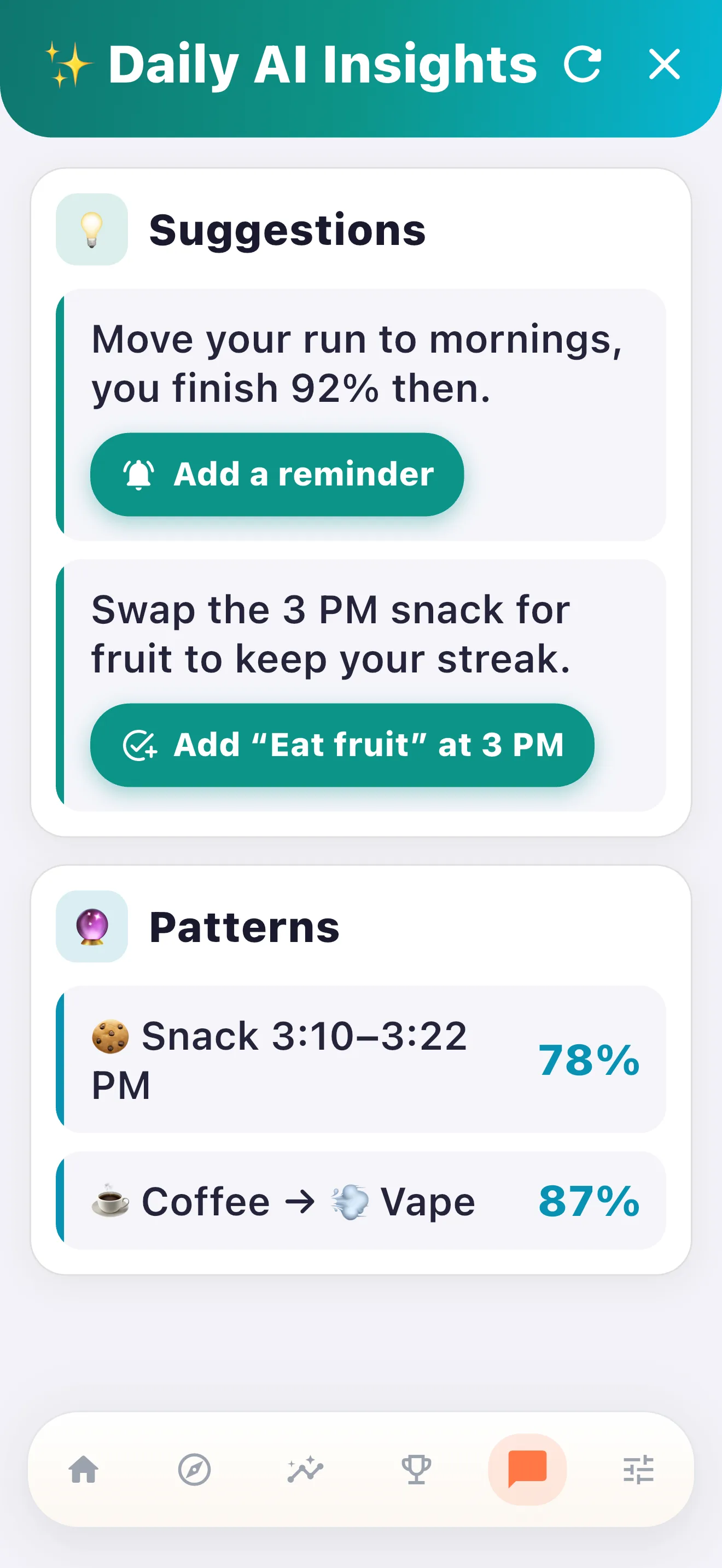
A lot of people land on this page searching for a beginner reading habit tracker, hoping the right app will do the heavy lifting. It mostly doesn't need to - the whole answer is one page a day, in one defended slot, with a book you'd read anyway. Where HabitIt, the smart habit tracker earns its place is a few weeks in, once there's enough logged history for its pattern detection to notice things you wouldn't catch by hand, like which slot you actually keep on weeknights versus which one you only manage on weekends.
Common failures
Starting with a status book. The one you feel you should have read by now will not carry you through week two. It can wait - it has been waiting for years already. Come back for it once 20 pages a day is your floor.
Reading in bed until you fall asleep and counting that as a session. Falling asleep over a book is fine - it means you're relaxed, which is good. Just be honest about what happened. If you read three pages and then dropped the book on your face, log three pages. The deliberate part is what you log. Everything after the book hit your face was a bonus.
Skipping the slot because there's only five minutes left in the day. Five minutes at a page a minute is five pages, which is better than zero and still fires the loop. Short on time means read short. The one-page minimum only ever marked what counts as a session, so a five-minute read clears it easily.
Not having the next book ready when you finish the current one. This is where more reading habits die than anywhere else. The book ends on a Thursday night and you feel good about it, but there's no next one lined up, so Friday you scroll. Saturday you tell yourself you'll pick something. A week later the reading slot has quietly been colonized by whatever was waiting to take it. The fix is boring: choose the next book while you're still in the middle of the current one, so the handoff happens without a gap.
Trying to read in the same physical spot where you scroll. If you read in the exact chair where you normally look at your phone, your brain arrives pre-loaded for scrolling. Small environment changes break that - a different chair, or the phone charging in another room during the slot. Leaving the book on your pillow in the morning works surprisingly well too. By bedtime it's a small ambush.
Beyond 30 days
At a consistent 20-30 pages a day - which is where most people land by the end of this plan - you're looking at roughly 20 books a year on the slow end, 30 or more on the faster end, depending on how long the books you pick tend to run. That number sounds abstract until you compare it to the 0 you were reading before. It's also enough to cover essentially any topic you want to go deeper on in a year, which is the real payoff.
Somewhere around month two or three, something changes. The slot stops feeling like a commitment and becomes the part of the day you look forward to, and at some point you catch yourself describing yourself as someone who reads. That identity shift takes longer than the 30-day plan itself, and that's fine - the plan's job was only ever to get you to the place where it can happen.
Two posts worth reading as you get there: how to read before bed instead of scrolling is useful if you're still fighting the phone in the bedroom, and the daily reading habit 30-day plan has a more detailed page-target progression if you want to push the ramp faster.
Build your 30-day reading habit plan today
Free 3-day trial of all features. After that the free tier covers the basic reading habit. No subscription required.


Get the Free 30-Day Reading Habit Starter Guide
Drop your email and we'll send a printable plan you can fill in and track. Occasional updates (max 1 per 2 weeks).
Success! Now check your email to confirm your subscription.
We respect your privacy. Unsubscribe at any time.