How to Build a Skincare Routine (Without Buying More Products)
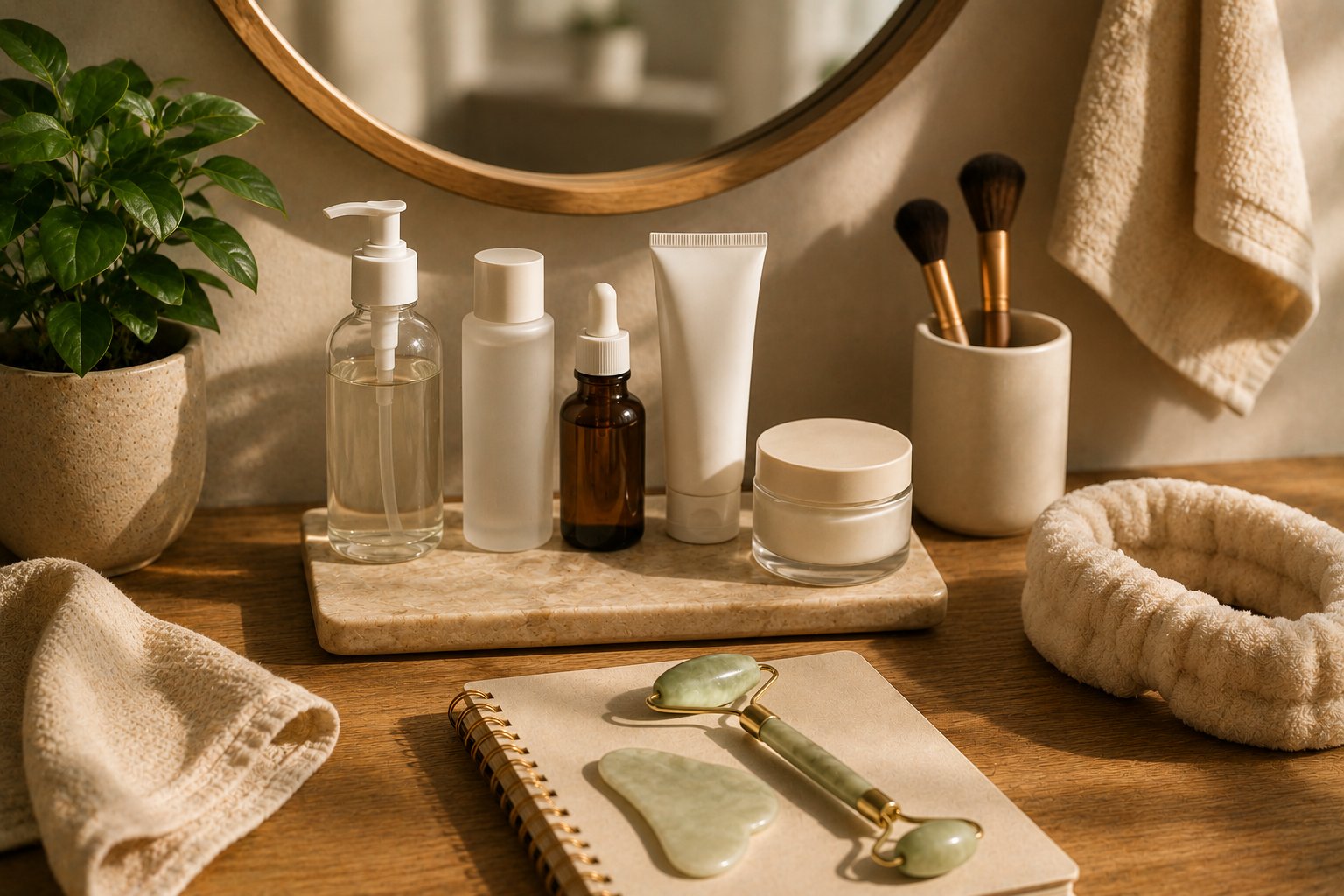
The skincare industry has done a beautiful job convincing you that the problem is your products. If your skin doesn't look good, you must need a different cleanser, a stronger serum, a fancier retinol. So you buy. The new product sits next to the last five new products you bought. And your skin still doesn't look any better, because the actual problem is that you've never done the same simple thing for 21 consecutive days. This post is the boring fix. Three products. Twice a day. For three weeks. A smart habit tracker to log the AM and PM reps so you can see the pattern building. Then keep doing it forever.
Why most skincare attempts fail
The failure pattern is so consistent it's almost funny. Three reasons, in order:
1. Too many products at once. A typical "starting" routine on TikTok now includes 8-12 products. Cleanser, toner, essence, serum, ampoule, eye cream, moisturizer, oil, SPF, then five different night-only products. The mental load of remembering the order alone is enough to kill the habit. It usually falls apart within the first couple of weeks, once a rushed morning wins and the twelve bottles stay capped. The fix is shocking in its boringness: three products max for the first 21 days.
2. Solving the wrong problem with shopping. Acne breakout, the brain says: I need a stronger product. So you buy. But the breakout came from weeks of skipped nights, and a stronger cleanser does nothing about skipped nights. The new product changes a variable that was working fine while the broken one sits untouched. Three months later you have eleven products and the same skin you started with.
3. No anchor for AM and PM. Skincare requires twice-daily reps. The morning half tends to survive because it rides along with getting ready for the day. The night half is where it falls apart - at 11pm, tired wins. And the PM skip is the variable that determines whether your skin improves at all. Without a PM anchor (like brushing your teeth, or right after dinner), the night routine collapses by week one.
The plan below kills all three.
The only three products you need
For 21 days, you will own three products. Not 11. Three.
1. Cleanser (gentle, fragrance-free). CeraVe Hydrating Cleanser is a solid, cheap pick around $14 - it clears the day off your face without stripping the skin underneath. Morning and night.
2. Moisturizer (cream, fragrance-free). CeraVe Daily Moisturizing Lotion and La Roche-Posay Toleriane both do the job well, usually $15-20. Same timing as the cleanser, morning and night.
3. Sunscreen, SPF 30+ (chemical or mineral, your call). A Korean drugstore SPF is the budget route at $15-20; EltaMD UV Clear costs more, around $45 direct from the brand. Either one works fine. This is the only product that's AM-only.
Total spend if you don't already own these: well under $100, once, lasting 3-4 months. Compare that to what a routine with a serum, a retinol, an eye cream, and a couple of "miracle" treatments would run over the same stretch, and the three-product version is a fraction of the cost - with better results, because you're the one who sticks with it every day.
Notice what's missing. No toner, no serum, no retinol, and none of the eye creams, acids, essences, ampoules, or oils either. Those are all upgrades you can earn after you've held the three-product routine for 60+ days. Plenty of skin never needs them at all. You certainly don't need them in week one, and you won't in week eight.
The 21-Day Plan
The PM routine doesn't start yet. We're installing one habit at a time. Right after brushing your teeth in the morning, work through it in order: rinse with the cleanser, pat dry, moisturizer, then SPF last. None of the individual steps take long, and the whole thing is done in about 90 seconds. The anchor is the morning teeth-brush, and the order never changes. By Friday this should feel automatic.
Right after brushing teeth at night, the PM routine runs. Cleanser, moisturizer. No SPF (you're going to bed). 60 seconds. The PM anchor MATTERS more than the AM one because the PM is where most skincare attempts collapse. If you skip a PM, the consequence is doubled: dirty skin overnight + a broken habit. Tie it to teeth-brushing on night one and don't let it drift.
This is the test week. Somewhere in it there's a bad day - a flight, a cold, a 1am night out. Run the 90-second version anyway. Holding through bad days is what locks the habit in place, and every exception you allow in week 3 keeps it fragile. By day 21 the routine is automatic and you no longer think about it.
The boring truth: this is the routine you hold for years. Skin slowly improves over 60-90 days as the consistent barrier care adds up. No fourth product on day 22, no retinol on day 30. You hold the three products until day 60, take stock of how your skin looks (it'll look better), and only THEN decide if you want to add one targeted upgrade. Stacked habits compound; product addition does not.
The Four Rules That Make It Stick
1. The anchor is teeth-brushing, both AM and PM. The teeth-brushing habit is one of the strongest, most automatic habits adults have. Tying your skincare to it inherits that strength. Anchoring to whenever you happen to have time is anchoring to nothing, and it collapses on the first rushed morning.
2. Three products only, for 60 days. Adding a fourth product in week 2 is the most common failure. Around then the routine starts to feel like it can't possibly be enough, a serum sneaks in, then a toner, and suddenly the 90-second routine is a ten-minute production that dies within days. Three products is the maximum until day 60. After that you can add ONE upgrade if your dermatologist or a real diagnostic suggests it.
3. SPF is the non-negotiable AM product. Of the three, SPF is the one that matters most for long-term skin health. UV is the largest controllable cause of skin aging and most skin cancer. On a lazy morning you can get away with skipping the cleanser. There is no getting away with skipped SPF, because that damage can't be made up later.
4. The PM routine is more important than the AM. Counterintuitive but true. The morning cleanse is mostly removing overnight oil, a light job. At night you're clearing a full day of pollutants, makeup, sunscreen, and skin cell turnover, which is a much bigger job. Skipping PM means going to bed with all of that on your face. The PM is where the actual cleaning work happens, so it lives right after the nighttime teeth-brush, same slot every night.
Running the plan
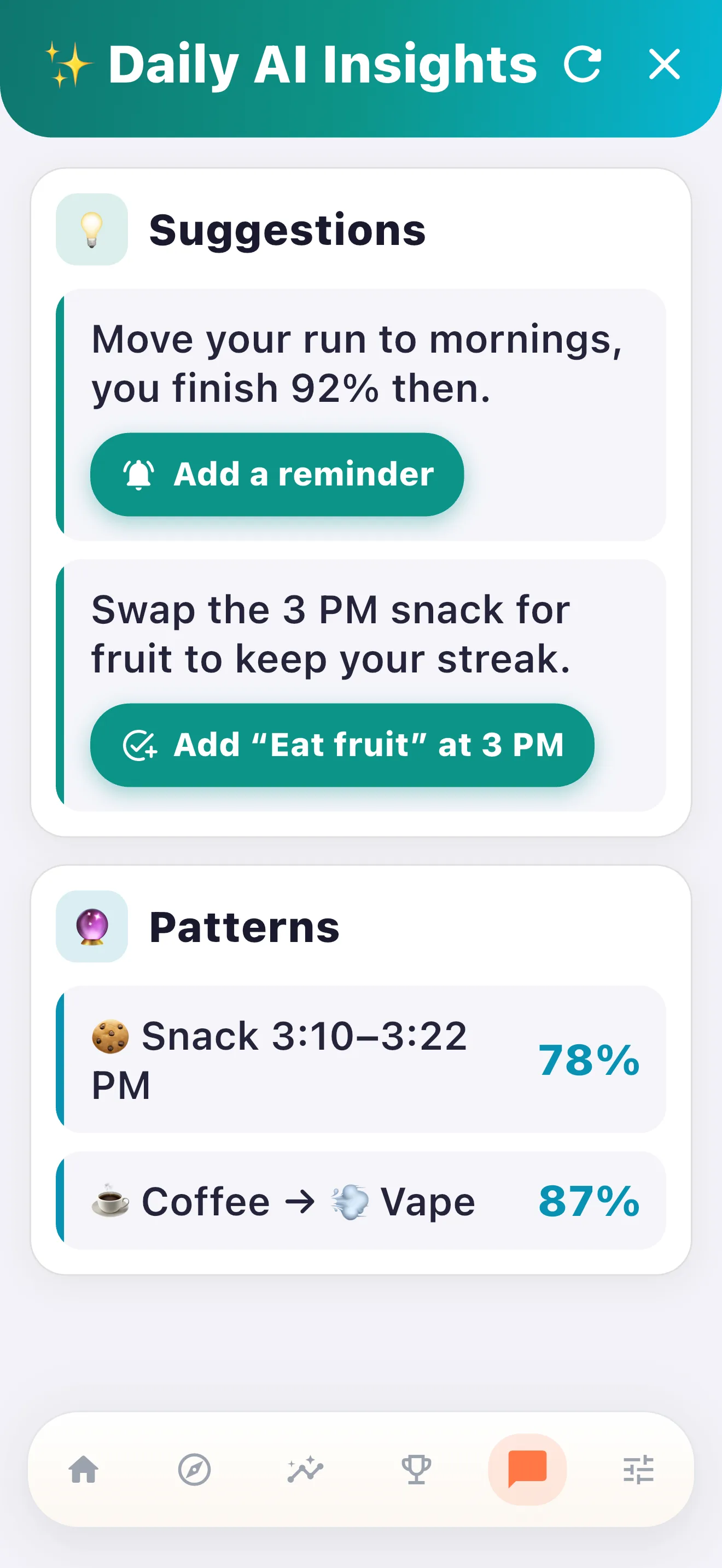
You can do this without an app. But tracking the AM/PM logs daily for 21 days creates a clear visual reinforcement that catches the slip days. The pattern matters more than the streak, and one missed PM in week 2 is just a data point. Look at the weekly pattern rather than the consecutive count. A smart habit tracker like HabitIt logs AM and PM as two separate daily entries so the week view shows exactly where the PM anchor is holding and where it's slipping.
Two things to track: AM done (yes/no) and PM done (yes/no). The PM column will have more misses early on; that's expected. By week 3 both columns should be 7-for-7. If they aren't, the anchor isn't strong enough yet, or you're trying to do too much. Drop a product if needed. The goal is consistency.
Everything above is the practical answer to how to build a skincare routine that survives contact with real life. For anchoring more broadly, the morning routine post goes deeper, and the bedtime routine post covers the PM anchor in detail.
Common failures
The ways this plan dies are predictable. The big one is adding products before day 60. A TikTok recommends retinol, it lands in your cart on day 12, the routine balloons, and the basics stop happening. Hold off until day 60, when you'll have actual data on whether the basics are working.
The second is the first skipped PM. It feels harmless. Within two weeks the skips are weekly, then daily. The 60-second version exists on every night including the worst ones, and on a truly terrible night you can drop the cleanser and just do the moisturizer. The habit holds when the bar is low enough that no night is too rushed.
Breakouts trip people up too. Skin reacts to environment, hormones, sleep, diet, stress - a week-2 breakout says nothing about your cleanser being wrong. Hold the cleanser for 60 days minimum before evaluating. Most breakouts resolve themselves once the routine is consistent.
Then there's the $80 serum myth. For the core active ingredients that matter most (ceramides, niacinamide, basic hyaluronic acid), dermatologists routinely point people toward the $15 drugstore version over the $80 one - the formulation does the same job, and the extra money is mostly buying packaging and marketing. Save it and spend it on consistency, the one variable that moves the outcome. Watch the identity trap too. Deciding you're "a skincare girlie" kills it the same way deciding "I could never be a skincare person" does - both turn 90 seconds of maintenance into a statement about who you are, instead of just a thing you do. Keep it boring. Three products, 90 seconds, twice a day. The boring version is the one that holds.
Beyond the 21 days
After 60-90 days of consistent basic skincare, two things will be obvious. One, your skin looks measurably better - smoother, less reactive, less prone to breakouts. Two, you have a strong AM/PM anchor that you can attach the next habit to. Chain a vitamin to the AM routine, a stretch to the PM routine, anything. The skincare habit becomes the trigger for the next habit.
The deeper point is that skincare plays out over 30 years, not 30 days. Someone who restarts a new routine every few months, chasing whatever's trending, ends up behind someone who just held three cheap products consistently the whole time - reps beat variety, every time. Three products, twice a day, for 30 years. That's the real plan. The 21-day version above just gets you started.
If you've been buying products for years and your skin isn't visibly improving, the shopping was never the weak link. Hold the three-product version for 21 days. A smart habit tracker that shows you the weekly AM/PM pattern makes the difference visible - a record of actual reps, gaps and all, with no streak to protect. Watch what changes.
Build your skincare routine plan today
Free 3-day trial of all features. After that the free tier covers the basic plan. No subscription required.


Get the Free Skincare Routine Plan
Drop your email and we'll send a printable plan you can fill in and track. Occasional updates (max 1 per 2 weeks).
Success! Now check your email to confirm your subscription.
We respect your privacy. Unsubscribe at any time.