How to Stretch Daily: A 5-Minute Routine
You sit at a desk for 8 hours and everything south of your neck knows it - hips, hamstrings, the shoulders that creep up toward your ears by 3pm. Every six weeks you do an hour-long yoga class, feel amazing for two days, then do nothing until the next one. The math is unkind here: 60 minutes once a month produces less mobility than 5 minutes twice a day. Stretching rewards consistency more than almost any habit in the health space, and the people with the best mobility at age 60 mostly got there on short daily sessions kept up for thirty years. This is the 21-day plan for installing that. A smart habit tracker logs the AM and PM sessions separately so the weekly pattern shows exactly where the routine is holding.
Why short-and-daily wins
Three things are going on.
1. Connective tissue adapts to load slowly and continuously. Fascia, tendons, and ligaments respond to repeated low-intensity stretching with gradual length changes. Occasional high-intensity stretching goes badly for the same tissue - that's how strains happen. So the 30-minute monthly yoga class buys you small acute changes that fully reverse before you're back on the mat, while the daily 5 minutes buys tiny changes that get to stack. Over a year, the daily version produces measurably better range of motion.
2. Neurological tolerance increases with frequency. Most of your perceived flexibility lives in your nervous system, which decides how far it will let you go before it starts signaling discomfort. Daily exposure raises that limit fast; a monthly session rebuilds the same tolerance from zero every time. After 21 days, the range that hurt on day 1 feels comfortable.
3. The habit is small enough to never miss. 5 minutes exists on every day of your life. A 30-minute class gets skipped the first Tuesday work runs late, and again the week you're getting over a cold. The 5-minute version survives all of it because the bar sits low enough that no day is too rushed to clear it.
Why most stretching attempts fail
1. The session is too long. Committing to 30 minutes a day sounds virtuous and lasts about 4-6 days before it collides with a real calendar. 30 minutes is a cruising-altitude number for someone who already stretches, and starting there is how the whole attempt ends by Friday. Start with 5. Some days you'll naturally extend to 10. The floor stays at 5.
2. No anchor. Deciding to stretch in the morning is an intention, and intentions lose to inboxes. The trigger has to be a thing that already happens - the coffee finishing, the shower ending, the oatmeal cooking. A trigger that specific fires on its own.
3. Following a YouTube class. Setting up the screen, finding where you left off, sitting through an ad - the startup friction alone kills more stretching habits than any lack of willpower. A memorized 5-minute sequence needs nothing.
4. Treating it like training. Stretching belongs in the same mental drawer as brushing your teeth: maintenance, with an intentionally low energy bar. When it turns intense and performative - sweaty, deep, pushing for progress - the energy cost climbs until one tired evening the whole thing quietly stops.
The 5-minute sequence you'll memorize
This is the morning sequence. Memorize it in the first few days - no video, no app, nothing to set up. Total time: 5 minutes.
1. Cat-cow on hands and knees - 60 seconds (10-12 reps, slow).
2. Downward dog hold - 30 seconds. Pedal the feet lightly.
3. Low lunge each side - 30 seconds per side. This is the one your desk-worker hip flexors will complain about at first.
4. Seated forward fold - 45 seconds.
5. Spinal twist each side - 30 seconds per side.
6. Standing forward fold - 30 seconds, arms hanging heavy.
7. Slow rise back to standing, gentle backbend - 15 seconds.
That's 5 minutes. You do not need any other moves for the first 21 days. The sequence covers your spine, hips, hamstrings, and shoulders - the four areas that are tight in 95% of adults. The PM sequence (week 2 onwards) is a different 5-minute set aimed at whatever the end of YOUR specific day leaves tight. More on that below.
The 21-Day Plan
One habit at a time. The PM doesn't exist yet. Right after coffee (or shower, or breakfast - pick your anchor), the sequence runs. The first three mornings will feel awkward; by day five it's automatic. Don't try to stretch deeper or add moves, and definitely don't film yourself. Just run the sequence. Week 1 is about installing the trigger, and the depth of the stretch barely matters yet.
The PM is different. It's slower, gentler, calming for sleep. Pick 5 stretches that target what's tight at the end of YOUR day. Desk workers usually want hip flexors and hamstrings. If you're on your feet all day it's calves and lower back, and if you spend the evening carrying kids it's shoulders and neck. 5 minutes total, anchored to brushing your teeth (after, not before). The PM stretch produces measurably better sleep, and of the two sessions it's the one that pays back more.
The test week. You will have at least one bad day, and the 5 minutes still exists on it - hotel floor if that's where you are. On the truly wrecked days there's the bare-minimum version: cat-cow + forward fold + low lunge, 90 seconds, done. Holding through bad days is what installs the habit for good. Every exception you allow teaches the routine that it's negotiable.
The habit is installed. By day 22 you'll notice your hips and hamstrings genuinely feel different, and the temptation is to get fancier - a third session, double the duration. Don't. Hold the 5+5 minute version until day 60. THEN, if you want a deeper Sunday session or a longer morning, the foundation will carry it. Add early and the foundation cracks.
The Four Rules That Make It Stick
1. The sequence is memorized, no video. By day three you should be able to run all seven moves on a hotel carpet with your eyes half open. A video adds 90 seconds of setup friction, and 90 seconds is enough.
2. The anchor is specific and existing. Habit chains attach the stretch to a ritual you already do every day - coffee, shower, oatmeal. No single change does more for the habit.
3. 5 minutes is the floor, not the goal. Some days you'll drift to 10 on your own; most days you'll stop at 5, and that's the design. Resist raising the floor in week 2 just because the week happens to be calm. Bad days can clear a 5-minute bar. They cannot clear a 15-minute one.
4. No intensity progression in the first 21 days. No trying to finally touch your toes, no deepening the lunge, no bonus wall stretch. Run the sequence at whatever depth is comfortable and let depth improve on its own once the reps are automatic.
Running the plan
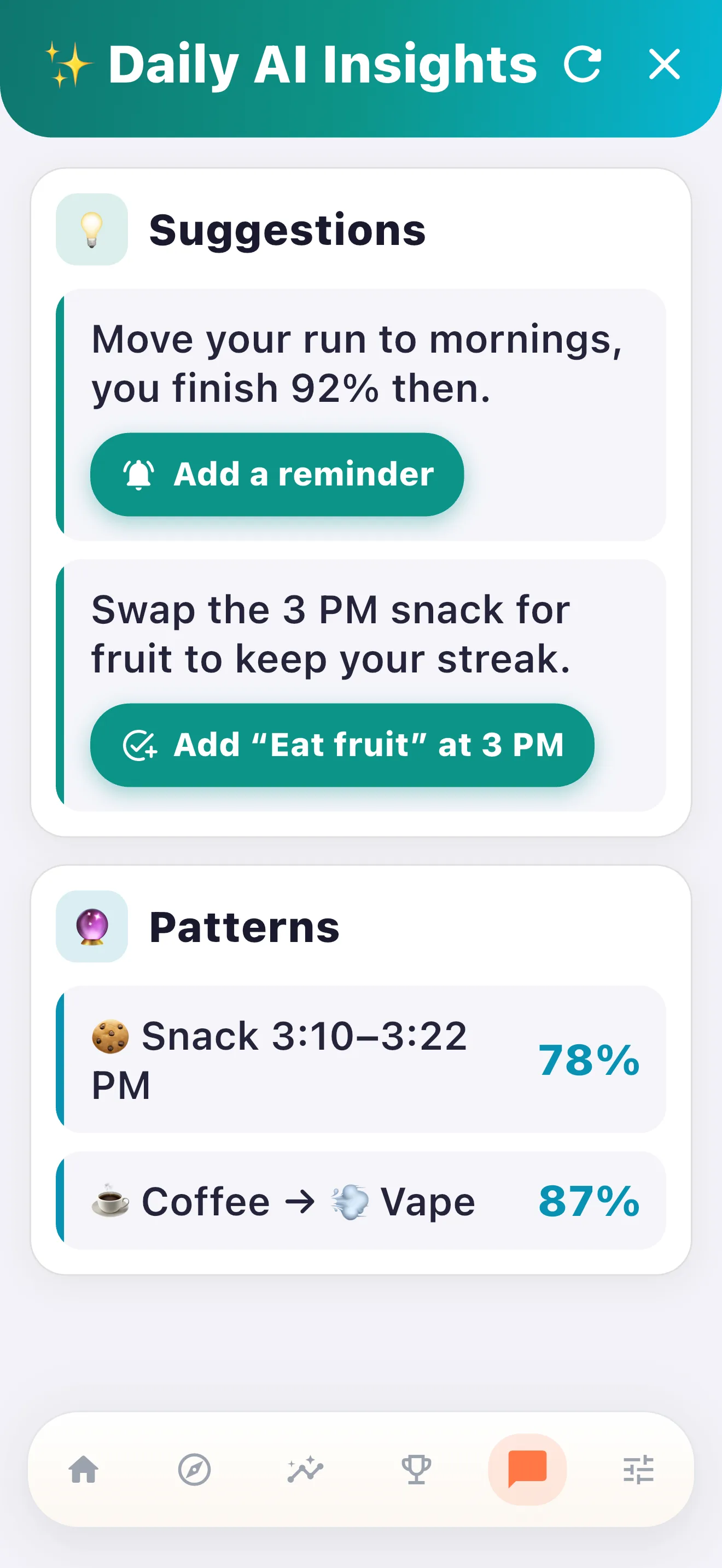
A smart habit tracker logs AM and PM separately, because the weekly pattern matters more than the streak. Hitting 7-for-7 in the morning while the evening sits at 4-for-7 means the PM anchor is weak and needs adjusting - a pattern you would never spot from willpower and memory alone.
The morning-and-night sequence above is the practical answer to how to stretch daily without carving a class-sized hole in your schedule. The morning routine post goes deeper on AM anchoring, and the bedtime routine does the same for the PM side. Once stretching is locked, the at-home workout is the natural next movement habit.
Common failures
The one that shows up first is the time excuse. A 5-minute session fits inside any day you will ever have, and on a day that genuinely has less, the 90-second bare-minimum version still fits. Skipping entirely is the only real loss.
Boredom arrives around day 10 and disguises itself as ambition - a new move, a deeper stretch, a YouTube flow that promises more. The boredom IS the habit installing; your brain is testing whether you'll hold the plain version. Hold it. The same trap has a physical cousin in week one, when muscles that haven't stretched in years feel mildly sore and the soreness reads as a warning sign. It's normal, and it resolves by day 7-10 as long as you keep the sequence at a comfortable depth.
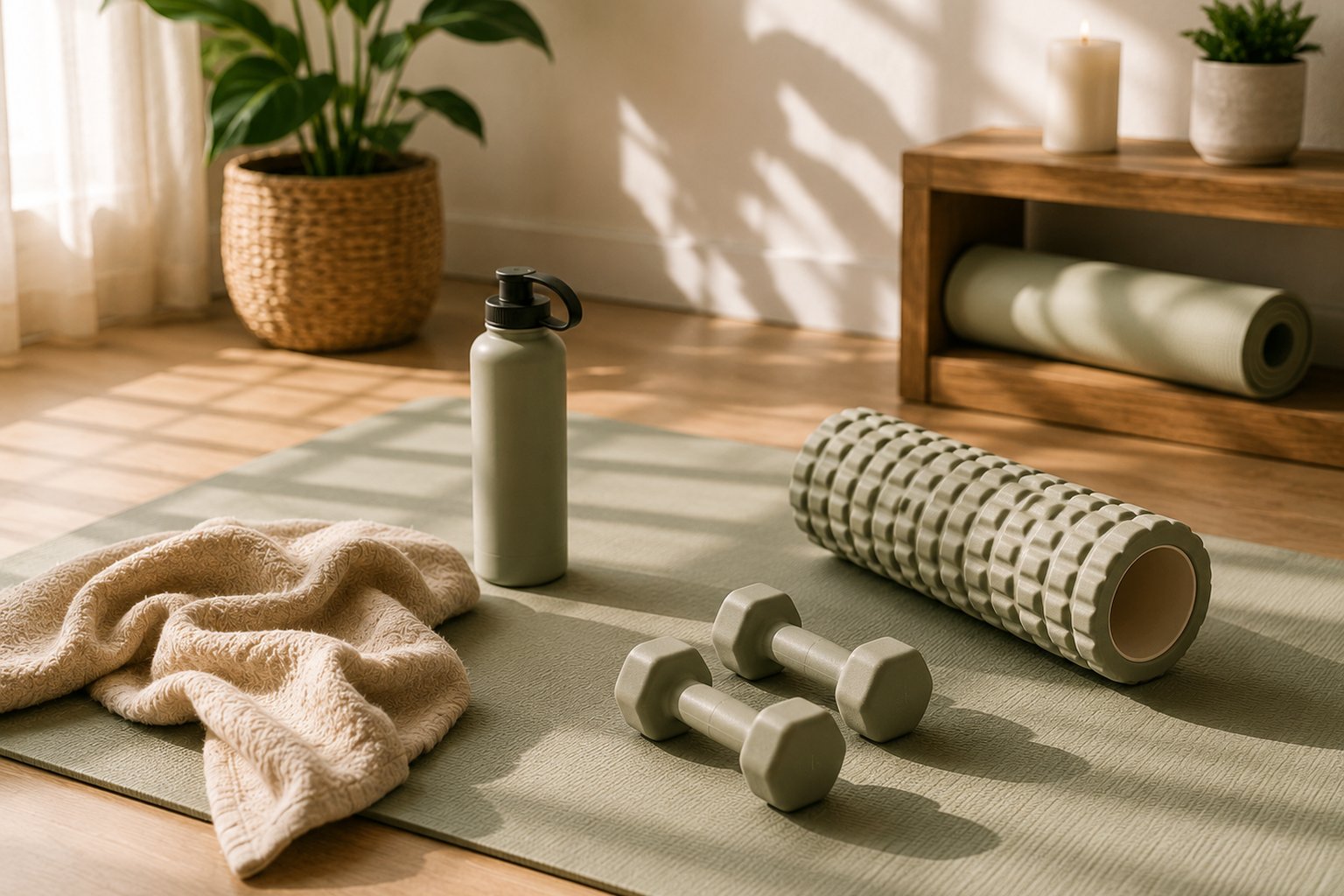
The PM session has its own killer: days when you walked a lot and feel loose enough already, so you skip once, then again, and by day 3 the evening half is dead. Muscles that worked all day still want lengthening at the end of it. One last trap catches people before they even start - waiting on a yoga mat to arrive. The mat is optional. A carpet or a folded towel works fine, and so does bare floor. Start today, on whatever surface you have.
Beyond the 21 days
Most of what reads as age-related stiffness is really accumulated neglect. The 60-year-olds who can still touch their toes tend to share one boring biography detail: a few minutes of stretching most days for the last 20 years. The compounding is real and the cost of starting is tiny - 5 minutes a day for the next year produces more flexibility than the same time spent in monthly hour-long classes for the next decade.
Stretching sits with the maintenance habits, alongside washing your face and drinking water, and nobody films a transformation reel about any of those. Expect to feel slightly looser, sleep slightly better, move slightly easier - small effects, repeated every day, for the rest of your life. Long-term, that quiet math is the only kind that holds up.
If you've been meaning to start stretching for years and never made it past two weeks, the issue was duration and anchor. 5 minutes after coffee, sequence memorized, held for 21 days - then see what changes. A smart habit tracker shows the weekly AM/PM pattern as a record of actual reps rather than a streak, so you can watch the compounding as it happens.
Build your stretching plan today
Free 3-day trial of all features. After that the free tier covers the basic plan. No subscription required.


Get the Free 5-Minute Stretch Sequence
Drop your email and we'll send a printable plan you can fill in and track. Occasional updates (max 1 per 2 weeks).
Success! Now check your email to confirm your subscription.
We respect your privacy. Unsubscribe at any time.