How to Track Your Mood Daily (Without Becoming a Patient)
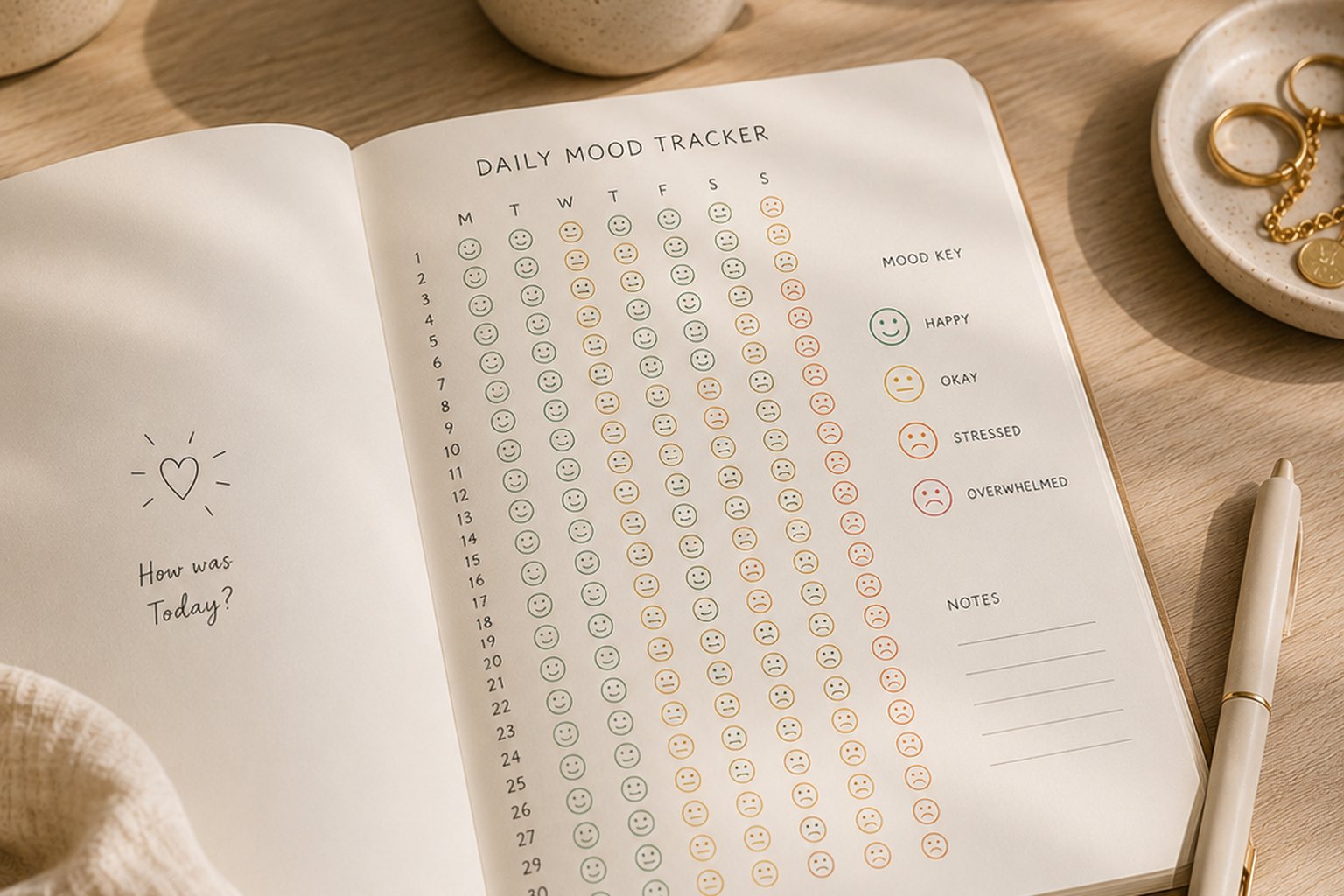
Mood-tracking apps mostly started life as clinical tools and got adapted for general consumers later, which is why one ordinary off day triggers five follow-up questions about symptoms, sleep, appetite, suicidal ideation, medication compliance. By week two you feel like a patient in a study you never signed up for. Mood-tracking can be genuinely useful for noticing patterns, but only if it stays light. A smart habit tracker keeps the check-in to one tap - one number, one optional word, each evening. The plan below is a 1-5 daily check-in anchored to bedtime, with no questionnaires and no diagnostic prompts. Enough signal to catch the patterns, and light enough that you never start feeling like a case file.
Why the lightweight version wins
The case for keeping it light comes down to three things.
1. Heavy mood-tracking medicalizes normal variation. Mood fluctuates daily for everyone. Some days you're a 5, some days you're a 2, mostly you're a 3-4, and that variation is healthy. Apps that follow every low rating with a symptom checklist turn an ordinary dip into evidence for a diagnosis, which is a strange thing to do to a random Tuesday. The plain 1-5 captures the same signal without the clinical framing.
2. The simpler the entry, the higher the consistency. A 10-second entry survives every day, including the terrible ones. A 10-question questionnaire quietly dies somewhere around day nine. And the value of mood tracking lives in the LONGITUDINAL pattern - the average across months, the weekday that runs hot, the shape of the post-weekend dip - which only shows up if you actually log daily. Fast entries are what make daily possible.
3. The real value is the accumulated pattern. Nightly introspection about how you feel and why is exhausting, and half the time the answer you produce at 11pm is wrong anyway. The 1-5 number plus an optional word is enough raw material. The actual thinking waits for the Sunday review, once there's a week of entries to think about. Splitting those two jobs is what keeps the practice from turning into burnout.
The 21-Day Plan
The scale: 1 = bad day (sad, anxious, drained). 2 = below average. 3 = neutral, average day. 4 = good day. 5 = great day (energized, content, light). The anchor is brushing teeth. Right after, in a note or app, the day's number goes down - no reflection, no journal entry, just the digit. This week exists to install the trigger. Insight comes later.
The word carries context the number can't - that the 3 was a flat 3 vs an anxious 3 vs a tired 3. Two seconds longer per entry. Resist the urge to write a sentence or explain anything; number plus one word is the whole entry. The vocabulary you'll build over a few weeks ("light," "flat," "buzzy," "drained," "open," "tight") becomes its own diagnostic later.
The first 14 days are pure logging. Week 3 adds the review. Sunday morning, look at the week: check the average, see whether the "drained" 3s mapped to specific events, notice if there was a Tuesday peak and a Thursday dip. Note one pattern in writing if you see one. DON'T try to diagnose, fix, or interpret beyond surface noticing - the response comes later, once there's more data behind it.
The practice is installed. The Sunday review usually turns out to be worth more than the nightly logging itself - patterns that were invisible day-to-day become obvious across a week. After 3 months you'll have enough data to see seasonal patterns, and after a year you can answer whether you run hotter in summer or winter with actual evidence. Keep it light. Don't upgrade to 3x daily logging or detailed journaling unless a specific clinical need surfaces.
The Four Rules That Make It Stick
1. One entry per day, evening, anchored to teeth-brushing. Three-times-daily logging sounds more rigorous and lasts about a week. Once, at night, attached to a ritual that already runs on autopilot - that's the version that survives a bad Wednesday. The single-rep anchor is what makes the habit hold.
2. Number first, word second, no narrative. The 1-5 is the primary signal and the word is optional context. The whole entry takes 10 seconds or less. Journaling is a separate practice that can complement mood tracking but shouldn't be confused with it.
3. No diagnosis from a 7-day window. One bad week is normal. Two consecutive 1s mean you had a hard week, and that is all they mean. Patterns require 30+ days to be meaningful, so let the data accumulate before you react to it.
4. The Sunday review is for noticing, not solving. If every Thursday runs cold, the useful next step is opening your Thursday calendar with some curiosity. The data hands you a question worth sitting with for a week or two. Verdicts can wait.
Running the plan
A smart habit tracker with 1-5 rating support keeps the entry to one tap. Even a paper notebook with the date and the number works fine. If you use an app, the daily entry should be one tap of a number on a 1-5 scale; if the app prompts for more than that in normal mode, it's too heavy.
The Sunday review is where the actual work happens. Set a 3-minute timer, look at the week, note one observation, close the app. Those 3 minutes tend to surface 80% of what daily journaling would - the longitudinal view shows patterns that single-day reflection can't.
If what you wanted was a way to track mood daily without it feeling clinical, the structure above is the whole method. The journaling post covers the deeper reflective practice, and the gratitude post covers a parallel daily check-in. For the mechanics of attaching a new log to an existing ritual, see habit stacking.
Common failures
The failure modes are predictable. Around week 2 comes the urge to upgrade to a serious mood tracker with more options. Resist it - the heavier the app, the lower the long-term compliance, and the 1-5 already carries all the signal you need. The same week usually brings the first strong day you'll want to explain in three sentences. Save the explanation for Sunday. The nightly entry is intentionally minimal, and that minimalism is the entire reason the habit holds.
Two weeks of data will also tempt you to diagnose yourself. You cherry-pick the 1s and 2s, ignore the 4s, and conclude you're depressed. Two weeks is noise. Wait for 30+ days before drawing conclusions, and if something genuinely concerning does show up in the data, that's a conversation for a clinician.
The subtler failures are about honesty. Skipping the log on a bad day because you don't want to write down a 1 keeps the most valuable data out of the record - a mood log with no 1s in it can't show you anything. And sharing the log with friends, a partner, or social media quietly changes what you write; within a week or two the entries drift toward performance. Keep it private. The honesty is the mechanism.
Beyond the 21 days
The data after 90 days starts to be genuinely interesting. You might learn that Wednesdays usually run a half-point lower than Tuesdays, or that the post-lunch dip on Mondays is real. Maybe the 4-5 days cluster in late summer while the 2-3 days pile up in February. None of it would have surfaced from memory alone, and all of it helps when you're designing your weeks.
The longer-term insight is that mood is much more environmental than it feels from the inside. Sleep, sunlight, food, exercise, social contact, and unresolved stress drive most of the variation - and once you have a few months of numbers, you can start testing which of those levers actually moves yours. More on that below.
If you've tried mood-tracking before and it felt heavy or clinical, the problem was the tool's design. Switch to the 1-5 plus one word approach, anchor it to bedtime, and hold it for 21 days. A smart habit tracker shows you the weekly pattern as it builds - a plain record of signal, no diagnosis attached - so the trends are there when you're ready to look.
What to do with the patterns once you see them
Somewhere in the first 60-90 days the log starts handing you patterns. They tend to fall into three buckets, and each bucket asks for a different response.
Day-of-week patterns. One weekday almost always runs colder than the others. Sunday carries anticipatory anxiety about the week ahead, Wednesday brings the mid-week energy dip, and Friday afternoon-into-evening is when the decompression collapse hits. Whichever one shows up in your log, it's usually structural rather than something wrong with you, so there are two sensible moves. Change the day's shape (a Sunday afternoon walk, a Wednesday lunch break out of the office), or accept the day's flavor and stop expecting it to feel like Tuesday.
Trigger-event patterns. The 2s cluster around specific recurring events - visits from a particular family member, certain meetings, a weekly call. Nobody is saying to cut those relationships off. Prepare differently (a buffer before, a recovery period after), or be honest about how much energy those events cost and plan around them.
Intervention-test patterns. Now you can A/B test. Pick one variable (sleep timing, exercise frequency, social contact, sunlight exposure) and change it for 30 days, then compare the average mood for the 30 days before and after. The difference is real evidence. Sleep and sunlight tend to move the numbers most, though half the fun is finding out which lever moves yours.
A different and less common set of patterns does deserve clinical attention - consistent 1s and 2s lasting 4+ weeks, severe drops with no environmental cause, or specific clinical symptoms like sleep loss, appetite changes, and hopelessness. If the data starts showing those, skip the app-store search and call a clinician. Bring the log; it's useful evidence at that conversation.
Build your mood tracking plan today
Free 3-day trial of all features. After that the free tier covers the basic plan. No subscription required.


Get the Free Mood Tracking Template
Drop your email and we'll send a printable plan you can fill in and track. Occasional updates (max 1 per 2 weeks).
Success! Now check your email to confirm your subscription.
We respect your privacy. Unsubscribe at any time.