How to Quit Online Shopping: An Amazon Detox Plan
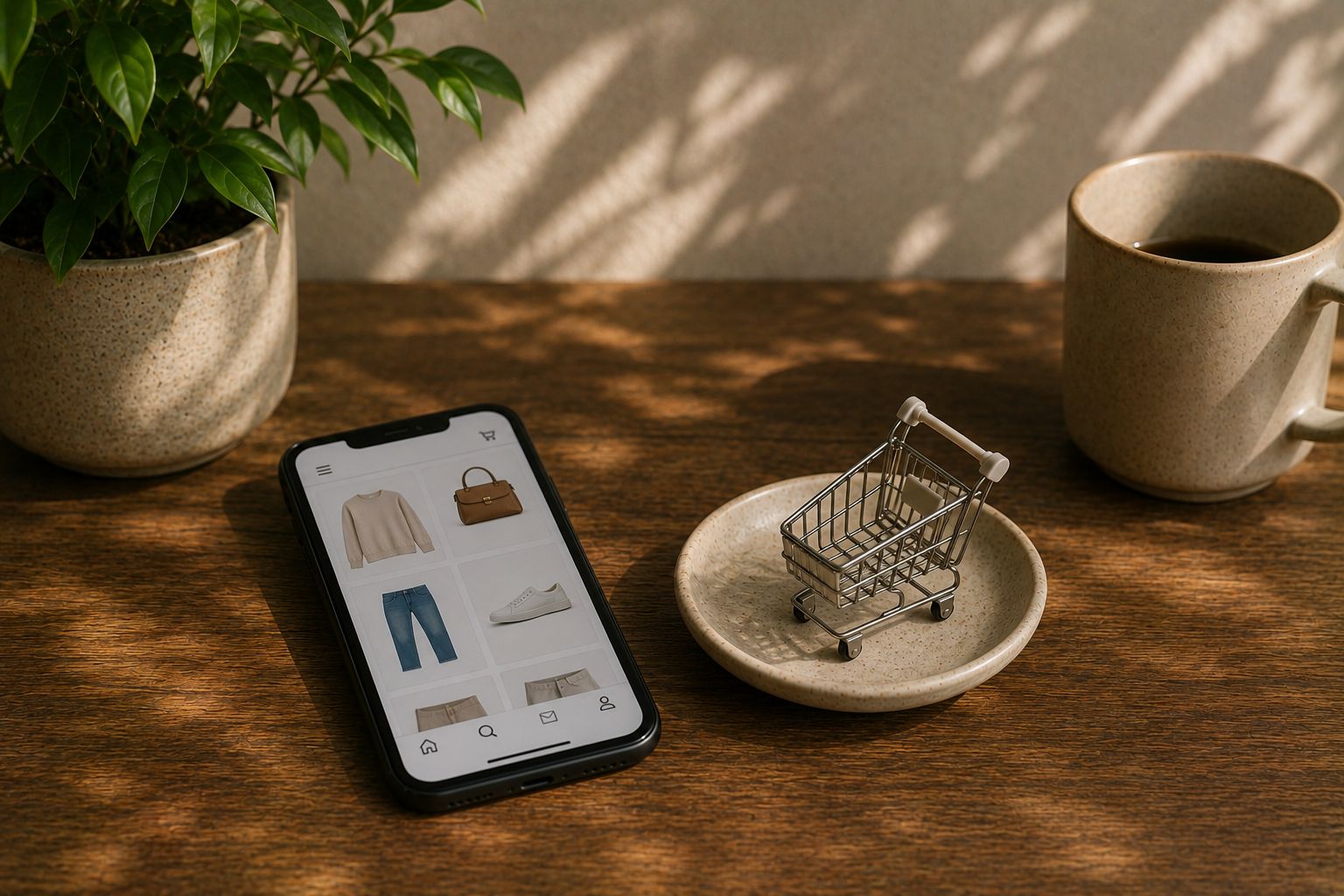
You ordered something Monday morning and Tuesday afternoon and Wednesday evening, and by Friday you had four boxes on your porch you genuinely don't remember choosing. The problem isn't that you wanted those things. The problem is that the Amazon app is two taps from your phone's lock screen, your card is saved, your shipping address is saved, and checkout takes about 11 seconds. The whole interface was engineered to remove the friction that used to keep impulse buying in check. A 30-day plan that puts the friction back, removes the saved data, and taps the cue rather than the purchase is what actually breaks the pattern. An AI habit tracker with an automatic daily plan runs the schedule so the only thing you do is show up.
The pattern you already know
Your shopping habit didn't develop because you have weak willpower. It developed because Amazon's product team has spent two decades grinding the friction out of buying. One-click ordering, saved payment methods, prediction-based home screens, the buy-button on every browse page. Each individual feature is a tiny optimization. Stacked together, they turn what used to be a 20-minute trip-and-decision into an 11-second tap. You'd never have driven to a store five times this week. You ordered five times because the friction to do so was lower than the friction to walk to the kitchen.
The reason cold turkey on Amazon doesn't work is that even with deleted credit cards, the company has stored every shipping address, every order history, every preference for two decades. Going from five orders a week to zero in a single Monday morning leaves a giant unstructured time block where the browse-and-order ritual used to fill. The evenings feel empty. Within a week, you're back on the app "just to check" and the slip becomes a relapse. This is the same shape as quitting any other low-friction-high-frequency habit: the friction is the problem, not the willpower.
This post is the taper version. You're not trying to never buy online again. You're trying to go from impulse-driven to deliberate. The plan below does that in four weeks by raising the friction back to where it was in 2010, removing the saved data that makes one-click possible, and installing a 72-hour cooldown that catches the impulse before it ships. This is the online-shopping cousin of the impulse spending reset, focused on the platform-specific mechanics. For the broader pattern of buying things you don't really need across all channels, the want-vs-need audit covers that.
Why most quit-Amazon attempts collapse in week one
The app staying on the home screen wrecks more attempts than anything else on this list. Every quit-Amazon attempt that fails has the same first hour: the saved cards get deleted but the app stays installed. The app icon is the trigger, and without removing it, the whole plan is willpower against an interface engineered to maximize tap-throughs. Most people lose that fight by Tuesday. Deleting the app, full stop, is the single highest-impact move in the entire plan.
Two smaller leaks tend to sink whatever survives that first cut. The browser often still has cards saved even after the app is gone - switching to desktop feels like progress until autofill hands the card back anyway, so the taper only works if every saved payment method comes out across every device, not just the phone. The cart is the other leak: things get added "to think about later," sit there, and get checked out days after the impulse would have faded on its own. The 72-hour cooldown in week 3 exists specifically to close that second leak by forcing the wait to actually happen instead of being optional.
The 30-Day Plan
This assumes a starting baseline of 4-6 online orders a week. If you're at 10+, run the plan over 6 weeks instead of 4 and drop more aggressively early. If you're at 1-2, you don't need a taper, you need the saved-card removal and the cart cooldown.
Amazon, Target, Walmart, Etsy, Temu, Shein, whatever you have. Delete them all from the phone. You can still buy from desktop browser; the goal is to add the 90-second friction of opening a laptop. The cap at 3 orders is the chemistry part: still buying, but a third less than before. Whatever you would have impulse-bought in the evening, you write down. Most things on that list don't make it to the next day's purchase consideration. That's the system working as designed.
Log into each shopping site, find the payment settings, remove every card. Don't keep "one for emergencies"; the emergency rationalization is how the cards walk back onto the account. Same for browser auto-fill: clear it. Now every purchase requires you to physically get your wallet, find the card, and type 16 digits. That ~45-second pause is often enough time for the impulse to fade on its own, which is the entire point of putting it back. Cap drops to 2 orders this week. The evenings will feel longer; this is the empty-slot problem and it's covered in the rules section.
This is the rule that catches the long tail of impulse buys. Anything you want gets put in the cart, screenshotted with the date, and left alone for three days. Most items don't survive the wait. The ones that do are the ones you actually wanted, not the ones you were about to dopamine-buy at 10pm. Cap drops to 1 order this week, total. Combined with week 2's friction, this should feel uncomfortable but not impossible. The 72-hour rule is the same one used in the impulse spending post; same mechanism, applied to a specific channel.
On Sunday, you write down what you actually need this week. Anything not on the list cannot be purchased. The one allowed order has to clear the 72-hour cooldown still. This is the sustainable cruising altitude: planned purchases, not impulse purchases. The friction stack from weeks 1-3 stays in place forever after this point; that's the new normal. The point of the taper wasn't to bottom out at zero, it was to relocate where the decision happens (in advance, on the list) instead of in the moment.
The Rule That Actually Matters
No "one exception" purchases, ever. The exception in week one is what kills the whole plan by week three: one Tuesday it feels like a thing not on the list is "really needed," the cooldown gets skipped, the saved card gets re-added "just for this," and the entire friction stack is rebuilt from scratch. Every exception is a full restart, not a footnote. If a genuine emergency comes up - a broken laptop needed for work - the friction is still just 45 seconds of typing a card by hand. That's not too much friction for a real need, and it's exactly why the rule doesn't need exceptions to still be livable.
Three smaller things reinforce it. The replacement ritual has to occupy the same time slot the shopping used to fill - lunch break or the 8-10pm window, most commonly - because an empty slot is exactly when the app gets re-downloaded, a structure the replacement habits framework covers in more depth. Unsubscribing from every promotional email and shopping notification matters too, since "lightning deal ends in 3 hours" is engineered to hijack attention at the exact moments the cooldown is most fragile. Telling one other person removes the social-shame trap of unexplained boxes showing up as well, turning it into accountability instead - the person who knows tends to ask what's on this week's list, which is often what actually holds the plan together.
Running the AI habit tracker plan with an app
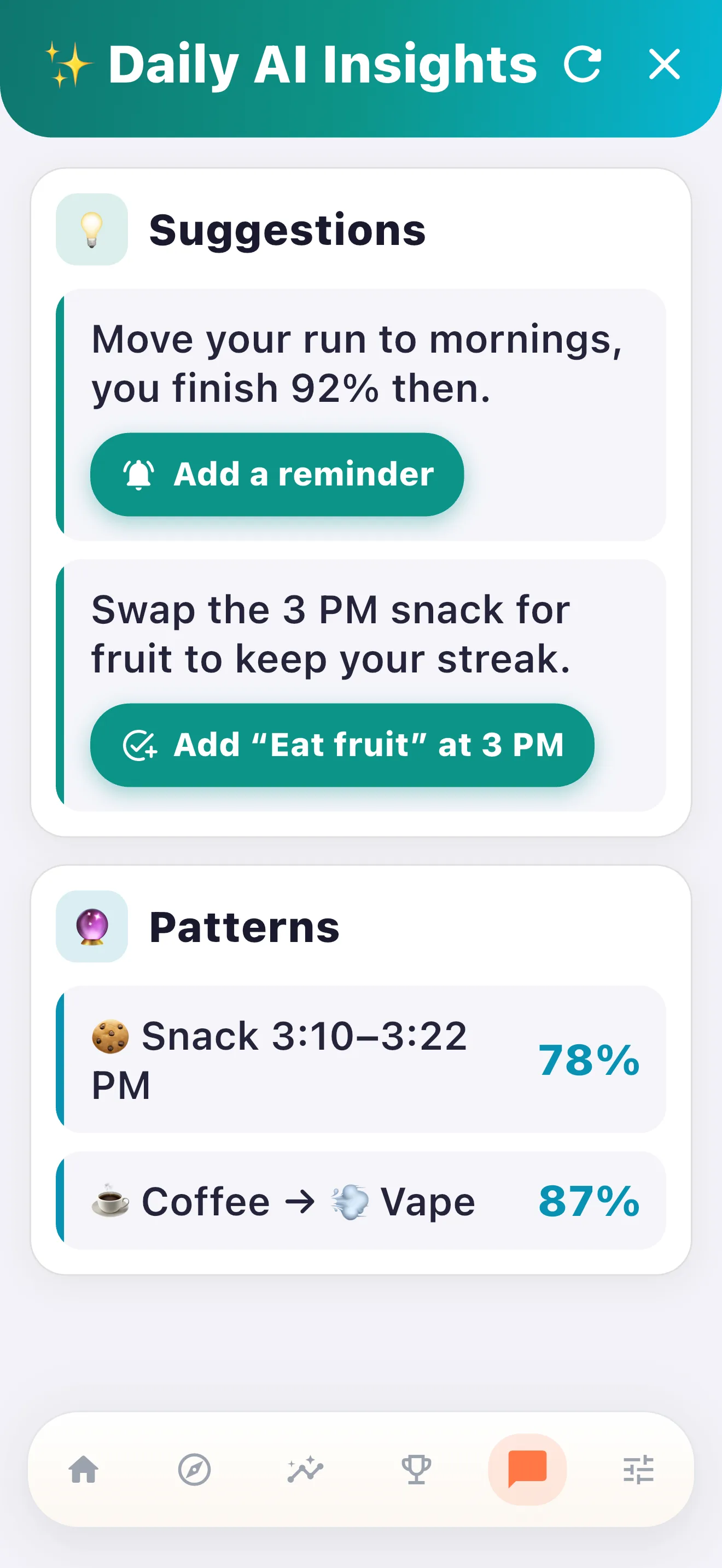
You can absolutely track this on paper. A weekly count, a daily check, a list of what you bought. The reason paper plans often collapse is that the evening you were supposed to mark a no-buy day, you didn't open the notebook, and by the weekend you couldn't tell whether you were on track. A phone is always with you; a one-tap log of "ordered today" or "didn't order" is harder to skip. The app handles the daily compliance, you handle the decisions.
Three things to look for in whatever you track this with. One, can you log orders per week with a clear weekly cap (3, 2, 1, 1)? Two, does it tolerate a slip without zeroing the streak, because you might have one and the punishment-tracker is what makes slips relapse? Three, can it remind you of the cart cooldown so you don't accidentally check out 71 hours in?
If you're looking for a quit online shopping app, an Amazon detox plan, or a way to stop online shopping addiction without going fully offline, HabitIt was built around exactly this kind of structured wind-down. You can build a stop impulse spending habit tracking plan in about ten seconds, free, no signup, and it covers the online-shopping side natively.
The Failure That Ends Most Attempts
Re-installing the app for "just one order" ends more of these plans than every other mistake combined. The Amazon app comes off the phone Monday and goes back on Thursday for a thing that felt urgent enough to justify it. It stays installed. By the following week the cap has quietly disappeared along with it. The rule that actually holds: if something is needed badly enough, it gets bought on desktop with the friction intact. The app itself stays off, with no carve-out for "just this once."
A handful of smaller drifts account for most of what's left. The cart turns into a wishlist instead of a cooldown when things get added "just to remember them" - a separate notes file handles that job without breaking the cooldown logic, since the cart should only ever hold items that have already cleared the 72-hour wait. Going under a weekly cap and "earning" extras the following week ("only ordered 1, cap was 2, so 3 next week is fair") treats the cap as a running budget instead of a ceiling, which is how the plan drifts back to baseline by month two. Switching to Temu, Shein, or some other platform after quitting Amazon is the same habit wearing a different domain - the cap has to count every online order across every platform, or it isn't really counting anything, and the same loophole shows up with social media, where quitting one app and starting another never actually quits the habit. Starting the plan in November or December is the last one, and it's mostly a timing problem: every retailer is running sales during the exact month everyone's willpower is lowest, so a four-week stretch outside that window gives the taper an actual chance.
Beyond day 30
The first 30 days handle the friction. The next 30 days handle the identity. Around day 50 you'll notice you stop reflexively reaching for your phone to "check Amazon" the way you used to. The browse-and-order pathway in your brain weakens because it stops getting reinforced. Most people report that by month three, their orders-per-week settles into a steady 1-2 of planned purchases, with months going by between non-planned ones.
The deeper payoff arrives at month six when you look at your credit card statement and realize the online spending dropped substantially compared to last year, without the feeling of having gone without anything. That's the diagnostic that the original five-a-week pattern was mostly impulse, not need. The few things you actually wanted still got bought; the rest were what habit looks like with a buy button. Same logic shows up at the day-4 wall in any quit: the first week is friction, the next several are identity, and the math gets clear once both have run their course.
Build your quit online shopping plan today
Free 3-day trial of all features. After that the free tier covers the basic taper. No subscription required.


Get the Free 30-Day Amazon Detox Plan
Drop your email and we'll send a printable plan you can fill in and track. Occasional updates (max 1 per 2 weeks).
Success! Now check your email to confirm your subscription.
We respect your privacy. Unsubscribe at any time.