How to Stop Impulse Spending: A 30-Day Cash-Only Reset
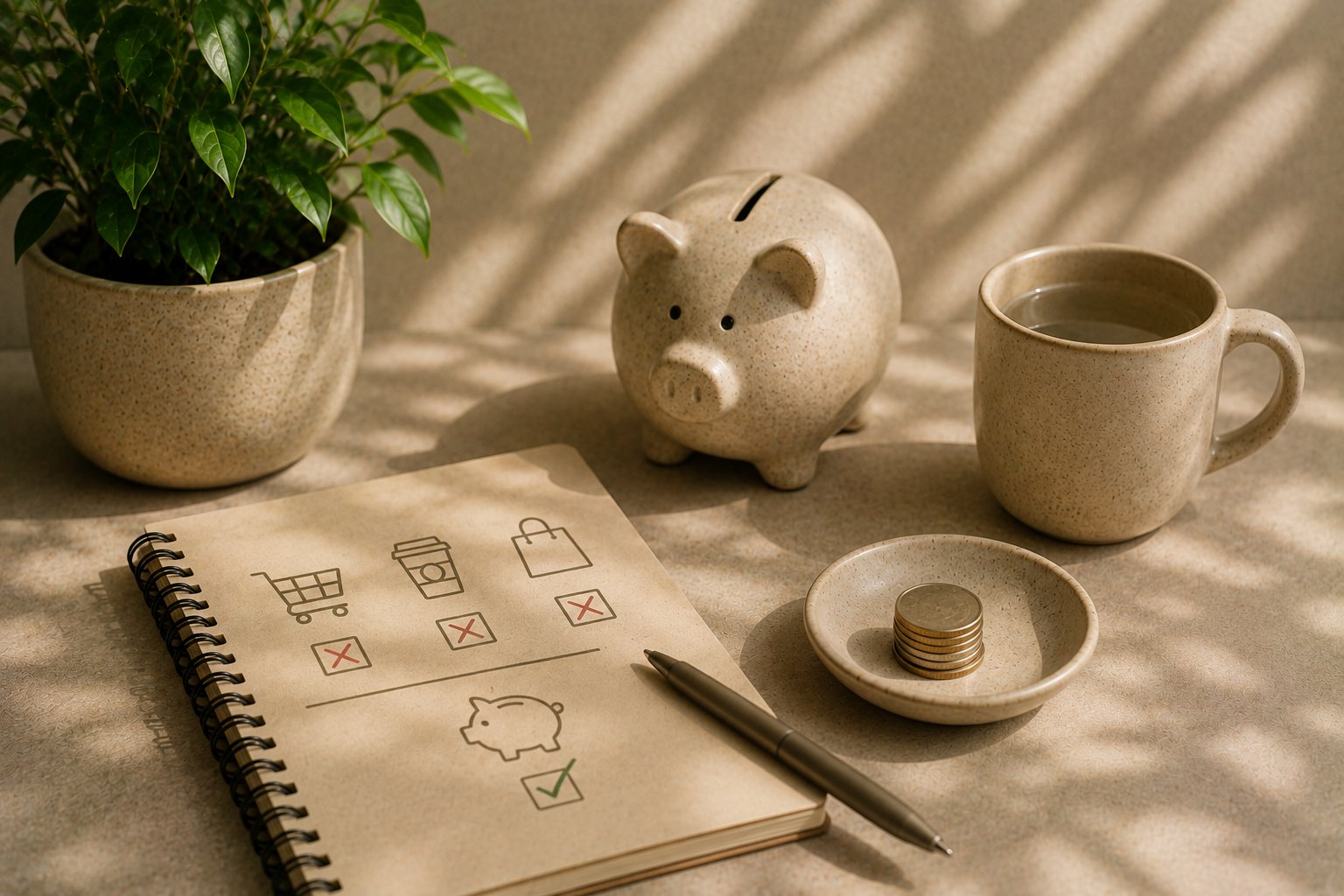
An Amazon cart full of stuff you don't remember adding. A $47 dinner you booked because it was Tuesday. The Sephora at 11pm thing where you "treated yourself" three nights in a row. By Sunday the bank app shows $620 you can't account for and you tell yourself next month will be different. Then it's the same. Budget apps don't fix this because they track what you spent, not why. The impulse moment is gone before the data lands. Here's the 30-day cash-only reset that breaks the impulse pattern itself, not the math after the fact. An AI habit tracker with an automatic daily plan logs the trigger moment, not just the receipt.
The pattern you already know
You said you wanted to save more this year. You downloaded YNAB or Mint or that one that's gamified. You set the budget. The first week you tracked everything. By week three you'd missed a few entries, by week five the app was a guilt-trigger you stopped opening, and by month two you were back to checking the statement on the 28th and feeling vaguely sick about what you'd spent. Then you swore off impulse buying for the next month. It worked for about nine days.
Here's what's actually happening. Impulse spending is not a math problem and it is not a discipline problem. It is a friction problem. Apple Pay, Amazon's saved card, the buy-now button on every retail site, Klarna offering four payments at checkout: the entire modern commerce stack is engineered to remove every pause between desire and purchase. You see the thing, you want the thing, your phone is already in your hand, the transaction takes 1.4 seconds. By the time any reflective part of your brain weighs in, the box is on a truck. The frictionless checkout was the product. You're not weak; you're operating inside a system designed specifically to bypass the reflection step. If the bulk of your problem is one specific retailer rather than spending broadly, we've also written a focused 30-day Amazon detox plan that strips the saved-card and saved-address layer first. If your spending goes beyond impulse buys into a broader pattern of acquiring things you don't genuinely need, the stop-buying guide covers the want-vs-need audit.
The reason budget apps fail at this is the same reason calorie-counting apps fail at obesity: they measure the outcome of a behavior you have very little conscious access to in the moment. By the time the transaction appears in the feed, the impulse moment is already over. What budget apps can't do is add friction back into the purchase pathway. That's what the 30-day cash-only reset is for. You're not reducing what you buy by 50%; you're reintroducing the physical pause between desire and action that the digital wallet erased.
Why most "I'm going to stop impulse spending" attempts fail
Three reasons, in order of how often they kill the attempt:
1. You track what you spent instead of why. Most budgeting tools categorize purchases by what they were (groceries, dining, shopping). The relevant data is whether each purchase was Planned or Impulse, regardless of category. A $200 grocery run with two impulse cheeses is different from a $200 grocery run that matched your list. Categorizing by Planned vs Impulse rather than by store reveals where the actual leak is. Almost no app does this and most people never think to track it.
2. You delete the apps but keep the cards. A common move is to uninstall Amazon, Temu, Shein from your phone in week one. Within three days you've reinstalled at least one because you "needed something." The deletion was theater. The card is still saved at every retailer's site you visit on a browser. The cards are the addiction, not the apps. Most successful resets either remove the saved cards or move to cash specifically because the friction has to be at the payment layer, not the discovery layer.
3. Stress and boredom triggers go unaddressed. The single most common impulse-buy context is a 15-minute boredom window (commute, lunch break, bedtime scroll). The second most common is acute stress (post-fight, post-bad-news, end of a brutal workday). Both produce a low-dopamine state, and a $30 purchase is the cheapest dopamine hit available to a phone-equipped adult. Until the trigger has a non-buying response, the reset will undo itself by week three. This is the same pattern that drives doomscrolling, just with a credit card attached.
The 30-Day Cash-Only Reset
This plan assumes you're starting from a baseline of "I impulse-spend most weeks and I can't quite say how much." If you're someone whose impulse spending is mainly one large category (clothes, electronics, food delivery), you can compress Phase 2 by limiting cash-only to that single category. The principle is the same either way: introduce friction at the payment moment, build the 72-hour pause for larger items, then let the new defaults compound.
For three days, log every dollar that wasn't a fixed bill, groceries, or transport. For each one, mark it Planned (you intended this purchase before today) or Impulse (you didn't until you saw it). Don't reduce anything; just collect the data. Most people are surprised to find that 50-70% of their non-essential dollars are Impulse, which is roughly double what they'd guessed. The audit is the part most people skip and the part that makes the rest of the plan land.
Friday morning, withdraw a fixed amount of cash (start with what you estimate as 60% of your usual non-essential weekly total). Restaurants, coffee, online shopping, books, hobby gear, anything optional: cash only. Bills, gas, groceries, prescriptions: stay digital. When the cash is gone, you're done buying non-essentials for the week. This sounds aggressive but it's not; the audit just showed you'd usually overspend that baseline, so you're roughly matching prior intent minus the overshoot. The hand-it-over-the-counter moment is the friction the tap-to-pay world erased.
Set a dollar threshold (somewhere between $30 and $100 depending on your baseline; lower if you impulse-buy small items, higher if you impulse-buy large ones). Anything over that threshold, you don't buy on the day you first want it. You write it down (or log it in the app) and revisit in 72 hours. The 72-hour window is what behavior researchers call the affective forecasting gap: most people predict an item will make them happier for longer than it actually will, and the prediction error mostly resolves inside three days. About 60-70% of items you wanted at hour zero will feel optional or even silly by hour 72. The 30% that survive the wait are the ones actually worth buying.
By day 22 your cash-only phase ends and you return to digital payment for everyday convenience. The 72-hour rule stays in effect indefinitely. The interesting data point: by day 30, most people see that several categories of spending have collapsed without effort (the late-night Amazon scroll, the bored-at-airport magazine, the third clothing purchase of the month). The brain that used to default to "buy" now defaults to "wait three days, mostly forget." Most people maintain a 60-70% reduction in impulse spending beyond day 30 because the friction-then-pause sequence has become the new default, not a temporary rule.
The Four Rules That Make the Reset Stick
1. Categorize Planned vs Impulse, not by store. A $40 Target run with $32 of impulses is a different problem than a $40 Target run that matched your list. Tagging the impulse fraction of each purchase is the data that reveals where the leak lives. After two weeks you'll see one or two specific categories accounting for 80% of impulses (almost always: clothes, food delivery, or "small home stuff"). If food delivery is the main culprit, cooking at home more often closes the loop at the source. Knowing the category lets Phase 3 target it specifically.
2. Track the urge, not just the purchase. The 72-hour rule data is the urges you waited on, including the ones you didn't buy. Logging "wanted this $80 jacket, waited, decided no" trains your tracker to show the savings that didn't happen as much as the purchases that did. This is the same principle as replacement habits: the brain needs to see the wins, not just the losses.
3. Remove saved cards from your top three retail sites. Amazon, the specific clothing brand you binge, and whatever third site you regularly buy from. Delete the saved card. The 90 seconds of typing card details on each purchase is enough friction to bury 40-50% of impulses without any other change. This is the digital equivalent of cash-handing-over. Almost free to do, ridiculously effective.
4. Have a non-buying response to the trigger. If your impulse buying is mainly bedtime scroll, put the phone in another room at 10pm (same fix as the wake-up plan's no-screens rule). If it's stress-driven, the response is a walk, a glass of water, or a journal entry rather than a checkout. Day 4 of any quit is when the trigger fires hardest; have the response ready.
Running the AI habit tracker plan with an app
You can run this whole plan with a notebook and a cash envelope. People did exactly that before fintech existed and the plan worked. The failure mode of the paper version is that on day eight you can't remember whether last Tuesday's purchase was Planned or Impulse, and by day fourteen you've stopped logging the 72-hour wishlist items because writing them down on paper feels like extra work. Without the Planned/Impulse split data and without the wishlist log, Phase 4 has nothing to settle around.
Three things to look for in whatever you use. One, can you log a purchase with a Planned/Impulse toggle in one tap, with optional notes for category and trigger? Two, can you log a 72-hour wishlist item with a built-in reminder for hour 72 to revisit? Three, does it surface "money you didn't spend" (the urges you waited on and then dropped) as a visible counter, not just the dollars you did spend? Without that, the wins are invisible and the plan stops reinforcing itself.
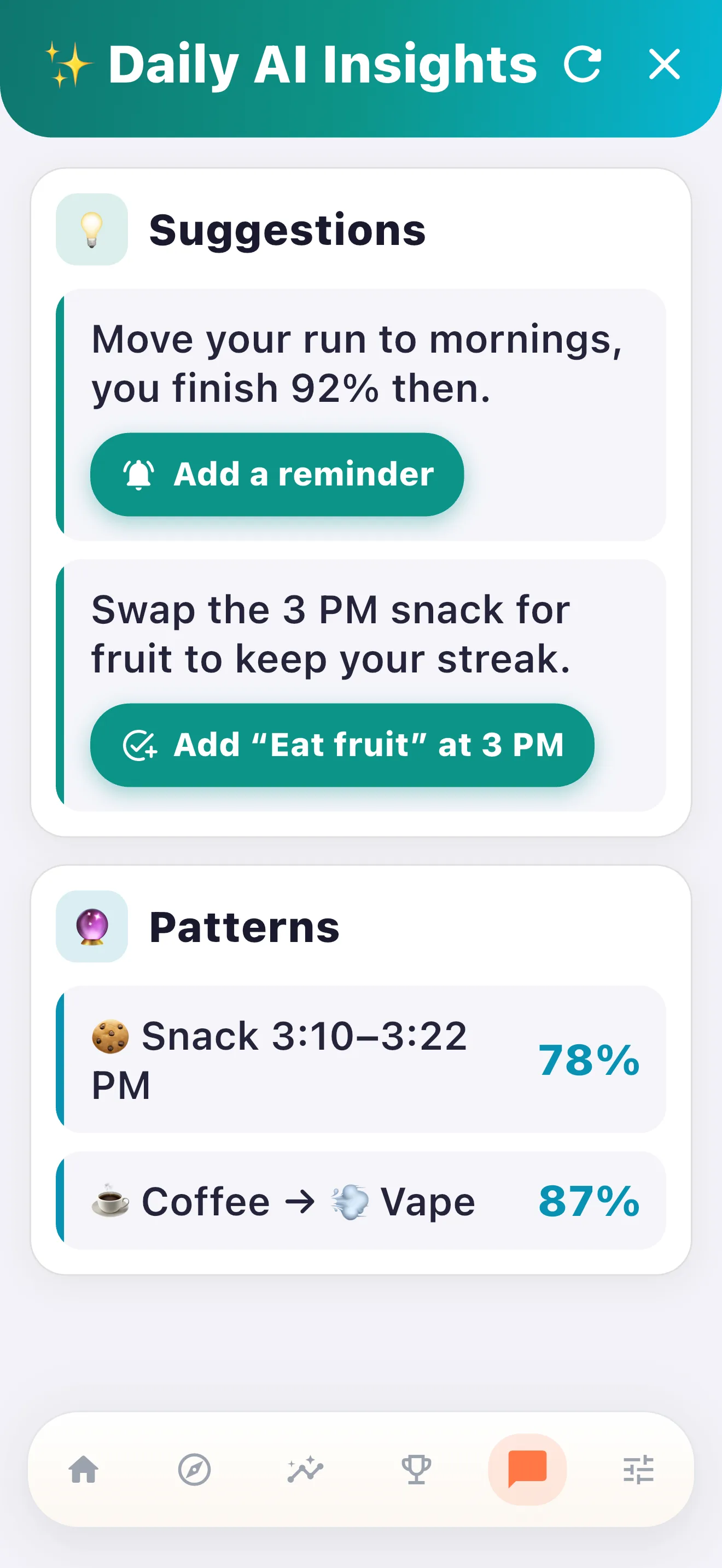
If you've been searching for a stop impulse spending app that does more than show you the damage after the fact, an impulse buying app that lets you log the urge and the wait, or just a way to break the frictionless-checkout pattern that budget tools refuse to address, HabitIt's quit journey was built for exactly this kind of behavior reset. You set the start number (your audit's impulse count) and the end number (zero or a maintenance level), and the journey generates the 30-day phase schedule. The cost tracker shows the dollars not spent on impulses, which is the data that makes day 25 feel like a win instead of a deprivation. The same friction-removal mechanics work for compulsive use of any single retailer or category - if your specific bleeding is gambling apps rather than retail, the sports betting self-exclusion plan applies the same logic with the legal self-exclusion lists layered on top.
Five Ways This Reset Still Fails
The gift card loophole. "I'll just use the Amazon balance I have, so it's not really spending." The balance came from cash you earned at some point and it counts. Most failed resets have a balance loophole somewhere (gift card from birthday, rewards points, store credit). Treat all balances as cash and track them the same way.
The "I deserve it" rationalization. Hard week, big deadline survived, fight with partner. The brain looks for a low-cost reward and a $60 purchase is the easiest. The rationalization isn't wrong (you do deserve a treat), but the deserving doesn't have to translate to a purchase. A long walk, a coffee out, a free hour of reading all close the deserve-gap without the financial cost. The reset doesn't say no to rewards; it says find one that isn't a purchase.
The "but it's on sale" trap. Sale messaging is engineered to bypass the 72-hour rule by inserting urgency. "Only 3 left! Sale ends tonight!" The honest reframe: if it was outside your wishlist at hour zero, the sale doesn't change that. If it survives 72 hours, it survives a not-on-sale price. Items that only seem worth buying because they're discounted are by definition not worth buying.
The week-2 wall. Around day 10-14 the novelty of the cash envelope wears off and the friction starts to feel annoying. This is the day-4 wall delayed, the same biological pattern showing up at the same fragile moment in any habit change. Most people who quit do it here. The recovery move is to look at the audit data from Phase 1 and remind yourself how much was leaking before. The cash envelope is annoying because it's working.
The "I'll restart next month" relapse. A 3-purchase binge on day 19 doesn't restart the plan; it's a single bad day inside the plan. The recovery move is to put the cash envelope back tomorrow, not start the whole 30 days over. Treating one bad day as a full restart almost always ends the plan; treating it as a Tuesday almost always saves it.
Beyond 30 days
The real prize of the reset isn't the dollars saved, though those add up fast (the median completed reset saves $400-$900 in month one). It's the change in your default. The brain that previously assumed "want it, buy it" now assumes "want it, write it down, see if it survives." That single shift compounds across years in ways that are hard to overstate. The brain that no longer impulse-buys also tends to no longer impulse-snack, impulse-text, impulse-commit to plans you'll regret. The decision-friction pattern transfers.
What people don't expect: the closets and shelves get less full over time. The impulse buys that used to arrive every week stop arriving. The pile of slightly-wrong clothes shrinks because you're no longer buying replacement clothes for impulse buys that didn't work. The kitchen has fewer one-use gadgets. The whole physical environment quietly simplifies in the background of a single behavior change. Anchoring the 72-hour rule to your existing payment routine (the moment you reach for a card, the moment you open Amazon) extends the effect.
For now: open a notes app, write down everything non-essential you spent yesterday. Tag each as Planned or Impulse. That's day one. The rest of the 30-day reset follows from that single audit.
Start your 30-day impulse-spending reset today
Free 3-day trial of all features. After that the free tier covers a basic quit journey. No subscription required.


Get the Free 30-Day Reset Plan
Drop your email and we'll send a printable plan you can fill in and track. Occasional updates (max 1 per 2 weeks).
Success! Now check your email to confirm your subscription.
We respect your privacy. Unsubscribe at any time.
Want the reset structured? Build a stop impulse spending habit tracking plan with the cash-only phase and 72-hour rule built in.