How to Stop Hitting Snooze: A 14-Day Plan
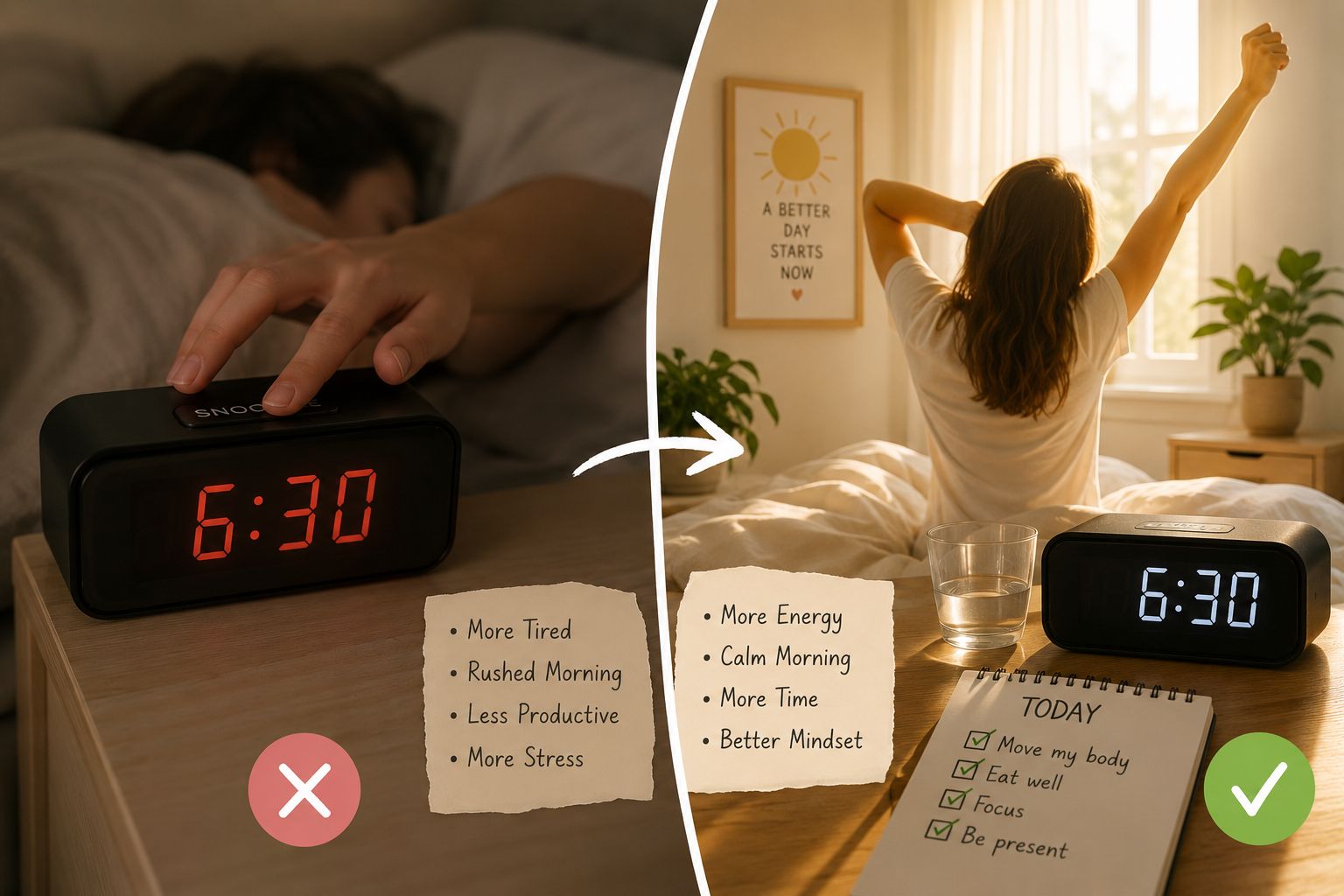
The snooze button is a 9-minute lie. The math sounds appealing, nine more minutes of sleep before the day starts. What you actually get is nine minutes of fragmented light sleep that restores nothing, a fresh sleep cycle your body can't finish, and a lesson to your brain that the alarm doesn't really mean get up. Chronic snoozers routinely wake up more tired than people who rise at the first alarm, even on less total sleep. This 14-day plan retires the snooze button for good, using a single-alarm setup and the feet-on-floor 5-second commitment.
Why snoozing makes you more tired, not less
When your alarm fires, your body has either just exited a sleep cycle (light wake, you feel OK) or is in the middle of one (deep wake, you feel awful). The snooze button doesn't give you "more rest"; it kicks off a new sleep cycle that gets interrupted 9 minutes in, which is the worst possible time to wake up. After 2-3 snoozes you've started and aborted 2-3 fresh cycles, and your brain is more disoriented than if you'd just gotten up at the first alarm.
There's also the trust problem. When the alarm has 4 snooze buttons attached, your brain learns the alarm isn't really "the alarm." It's the first warning of an eventual wake-up that might be 9, 18, 27, or 36 minutes later. So your brain stops releasing the cortisol it would normally release at the alarm time, because the alarm doesn't actually mean wake up. This is why the first alarm starts feeling impossible to obey over months of snoozing; you've trained yourself out of treating it as the real signal.
This plan retires the snooze button through structural design and asks almost nothing of your willpower. The phone moves across the room. The backup alarms get deleted. The single remaining alarm becomes a single moment of decision, and the feet-on-floor 5-second rule closes that decision before the snooze impulse can even fire. The wake-up earlier plan handles the broader sleep schedule; this is specifically the snooze-button intervention.
Why "I'll just stop snoozing" doesn't work
Three things keep you snoozing, and the plan takes on each one.
1. The phone is on the nightstand. This is the load-bearing failure. A snooze button within reach of your pillow gets hit, every time. The 5am contest between your sleepy hand and that button is one your willpower cannot win. The fix is structural: phone or alarm clock lands across the room, so silencing it means standing up.
2. You have 3 backup alarms. 5:00, 5:15, 5:30, 5:45. The brain knows it has 45 minutes of buffer, so the 5:00 alarm becomes meaningless. You snooze through all of them and wake up at 5:45 having slept fragmented for 45 minutes. The fix: ONE alarm, on the wake time. No backups.
3. You haven't decided what happens in the first 5 seconds. Snoozers hold a little debate with themselves at the alarm, running through the maybe-just-one-snooze, the I-went-to-bed-late-I-deserve-it, the what-time-is-it-really. The fix is the feet-on-floor 5-second rule. When the alarm fires you get 5 seconds to put your feet on the floor, no debate and no thinking, because 5 seconds is too short a window for the rationalization to even form.
The 14-Day Plan
This assumes a baseline of 2-4 snoozes per morning. If you're at 5+, run the plan over 21 days. If you're at 1, you mostly just need the structural changes (move phone across the room, single alarm) without the gradual cap reduction.
The structural change. The phone gets a charging spot across the bedroom, ideally near a light switch or window. When the alarm fires, you have to stand up, walk over, and turn it off. Even if you go back to bed after, the activation of physically standing breaks the snooze cycle. Cap at 2 snoozes this week: you can still snooze, but you'll be physically out of bed to do it, which catches roughly 60% of the snoozes that would have happened with the phone on the nightstand. Buy a cheap alarm clock if you don't want to use the phone for this (about $10).
Open your alarm app and delete every backup. There is now exactly one alarm at your wake time. No 5-minute or 15-minute backups. The 5-second rule installs: when the alarm fires, you count to 5 (or just go on instinct) and put your feet on the floor. The feet-on-floor commitment is what actually breaks the snooze reflex; once you're vertical and weight is on your feet, the brain commits to morning. Cap drops to 1 snooze this week, which gives you a buffer for genuinely bad nights without abandoning the rule.
The snooze button is retired this week. After 6 days of structural friction (phone across room) and 5 days of the feet-on-floor rule, the snooze impulse is dramatically weaker. To lock it in: after you turn off the alarm, the next move is lights on. Bedside lamp, overhead light, or open the curtain to let morning light hit your eyes. The light is what tells your circadian system to commit to wake. Without the light, the back-to-bed impulse stays strong; with it, the brain accepts that morning has started.
The sustainable cruising altitude. The wake-up routine is now: alarm fires → walk to alarm → silence → lights on → feet on floor stays. Total elapsed time from alarm to vertical-with-lights-on is roughly 15 seconds. The snooze impulse no longer fires reliably because the new pattern has overwritten it. The phone-across-the-room and single-alarm rules become permanent. Bedtime moves earlier if needed (the get to bed plan handles that side). Most users report they wake up sharper at the alarm than they did before, even on the same total sleep, because the snooze-fragmentation is gone.
The Four Rules That Make It Stick
1. The phone is never on the nightstand again. Permanent rule. The phone-as-alarm-on-the-nightstand setup is the single biggest predictor of snooze relapse. Buy the $10 alarm clock or charge the phone across the room. The 60-second decision saves the next year of mornings.
2. One alarm, no backups. The backup alarms are insurance against the single alarm not working, but they ARE why the single alarm doesn't work. Delete them all. If you miss the alarm and oversleep, that's a one-time event; the structural fix is going to bed earlier, not adding more alarms.
3. Feet on floor within 5 seconds. The 5-second rule (popularized by Mel Robbins) is doing the actual work of breaking the snooze reflex. The window is too short for the rationalization to form. By the time your brain thinks "maybe just one snooze," you're already standing.
4. Light within 10 seconds of standing. The lights-on step commits the circadian system to wake. Without it, the back-to-bed impulse stays alive for 30+ minutes and the snooze reflex tries to reform on the next morning. The lights are the lock-in signal that this is now wake time.
Running the Plan With an App
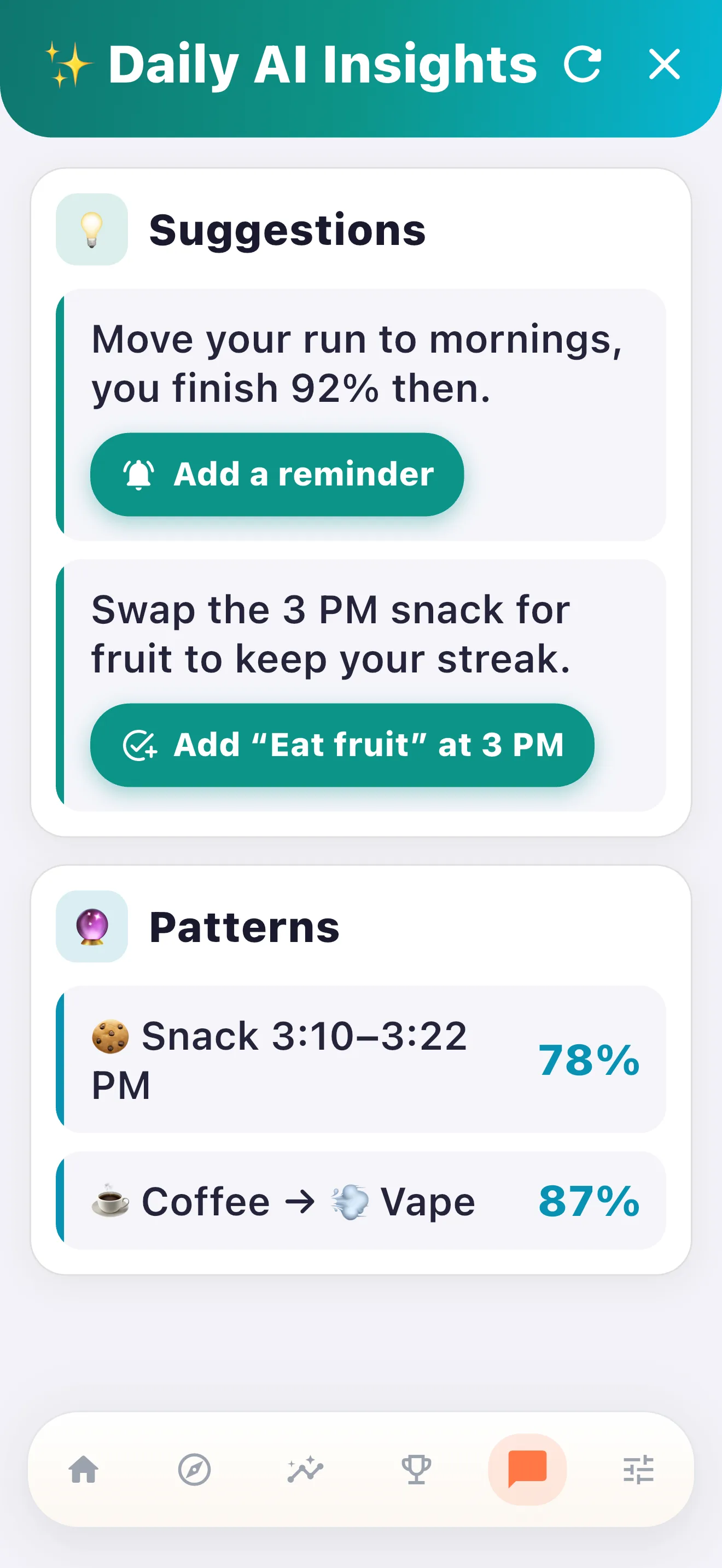
You can absolutely track snoozes on paper or in your head, but a phone-based tracker is useful precisely because the phone is the snooze source. The tracker logs the snooze count at end of day; the daily check creates accountability that "I'm fine" doesn't.
Three things make a tracker useful here. It should let you log snoozes each morning against a cap that steps down from 2 to 1 to 0. It should absorb a slip without zeroing the streak, because some sick or jet-lagged morning you'll snooze and that has to be OK. And ideally it nudges you about the feet-on-floor rule at bedtime, so tomorrow morning is already primed.
HabitIt was built for exactly this kind of count-based behavior reset, which is all that logging a daily snooze cap really is. The wake up earlier plan and get to bed plan are the sister reads for the broader sleep schedule when snoozing is part of a bigger morning problem.
Five Ways the Plan Still Falls Apart
Keeping the phone on the nightstand "just for one more night." The exception that becomes permanent. The phone-across-the-room rule has no exceptions for week 1 onward.
Replacing the snooze button with multiple alarms set 5 minutes apart. Same problem, different shape. One alarm, no backups. The single alarm forces the body to treat the alarm as real.
Going back to bed AFTER turning off the alarm. The feet-on-floor rule has to include staying on feet for at least 60 seconds. Turning off the alarm and crawling back to bed is the snooze pattern in a different costume.
Quitting after one bad morning. You hit snooze 3 times on Tuesday. That's one bad morning. Wednesday's plan resumes at the current week's target. The restart logic applies the same way as any other habit.
Trying this without fixing bedtime. If you're going to bed at midnight and trying to wake at 6, no amount of snooze-button intervention will work because the underlying sleep deficit is real. Fix bedtime first (the bedtime plan) or run them in parallel. Snooze plans without enough sleep are theater.
Beyond day 14
The first 14 days break the reflex. The next 30 build the new wake pattern. Around day 30 you'll notice the alarm fires and you stand up without the internal debate that used to happen. The snooze button is now a UI element you don't engage with, like the screenshot button or the volume rocker. Most users report they wake up genuinely sharper at the alarm than they did before, even on identical total sleep time, because the fragmentation from 2-3 partial sleep cycles is gone.
The honest version of all this: the snooze button was never the enemy, but the way it usually gets used turns it into one. Removing the option entirely is far easier than learning to use it with discipline every groggy morning. The phone-across-the-room, single-alarm, feet-on-floor combination does the real structural work, and once those three are in place your willpower barely has to show up. A solid morning routine is the natural next companion habit because you've now reclaimed the morning minutes you were losing to snoozing.
One nuance worth flagging: some people have legitimately late chronotypes (the genuinely-evening-oriented sleep schedule that some research links to genetic variation). If you've tried this plan and your body fights every morning wake-up regardless of bedtime, your wake time might just be wrong for your chronotype, not the snooze button being the problem. Most "I'm a night owl" claims are actually "I've been staying up late for years," but a small percentage of people are real outliers. If after 30 days of running this plan with adequate sleep your body still resists every morning, talk to a sleep doctor; the answer might be moving your work schedule rather than fighting your biology.
For everyone else: phone across the room, one alarm, feet on the floor. The three rules do the work.
Build your stop snooze plan today
Free 3-day trial of all features. After that the free tier covers the basic plan. No subscription required.


Get the Free 14-Day Stop Snooze Plan
Drop your email and we'll send a printable plan you can fill in and track. Occasional updates (max 1 per 2 weeks).
Success! Now check your email to confirm your subscription.
We respect your privacy. Unsubscribe at any time.