The Habit Audit: How to Decide Which Habits to Keep
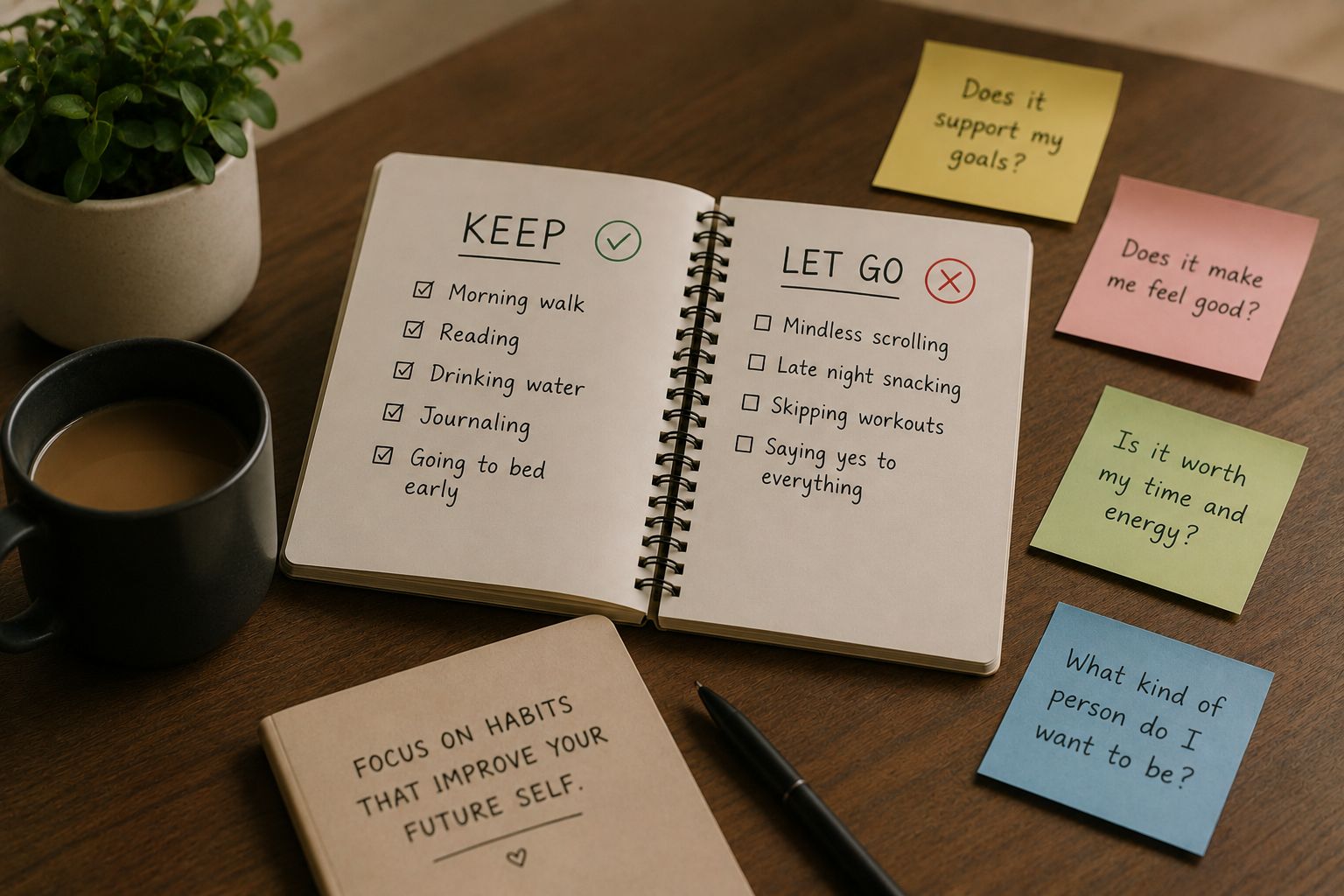
You're tracking 14 habits. On a good day you complete four of them. And somehow you feel worse about it than back when you had no system at all. This isn't a laziness thing. Fourteen habits is just more than anyone can hold at once, and the people who seem impossibly disciplined are usually the ones who quietly gave up on ten of theirs. The Habit Audit is the quarterly cleanup that takes you down to the handful worth keeping. It's the part of habit-building almost nobody does, because it means admitting a few habits you're kind of proud of stopped pulling their weight a while ago.
The 14-habits-and-failing pattern
It always starts small. A few good habits. Then six months go by and the dashboard has 14 entries on it. A handful are tracked but rarely actually done, like the 20-minute meditation and the daily page of journaling. A few get done but barely matter, like logging water or counting a 30-minute read you'd have done anyway. And then there are the ones set so long ago you can't recall the reason, the cold plunge and the deep-breathing timer just sitting there. The dashboard has become a chore in its own right. Keeping the system fed now costs more mental energy than the habits give back.
Plenty of people who track habits seriously run this cleanup every quarter. Most of the habits you've piled up are worth less than you'd guess, and cutting the weak half tends to make the strong half hold much better. Your ambition doesn't have to shrink. You just have to accept that willpower is a fixed daily budget and 14 habits are all drawing from the same account, so pointing that budget at the few habits that matter gets you more back.
This is a framework you run a few hours a quarter, not a daily plan. You come out of it with a shorter list, usually 3-7 habits, grouped into 2-3 chains, and the cut habits actually gone. Filing them under "I'll get back to it next quarter" is just avoidance with a nicer name. Habit chains are where the survivors go.
Why most accumulated habit lists fail
Three things drive it. The first is that you added without ever subtracting. Every quarter you found a new habit that sounded valuable, added it to the dashboard, and left everything already there in place. A year of that leaves you with 14 habits and the willpower budget for 5. No habit-tracker app applies any pressure to subtract, which is exactly why the audit has to be a manual quarterly discipline.
The second is vanity. Tracking 100oz of water feels virtuous and does almost nothing at normal intake. The 20-minute meditation goes in the log because it looks good there, and then gets half-done at a depth that was never going to help. On their own these are harmless enough. The damage is that they crowd out the habits that move your life, and your dashboard charges the same willpower toll for a vanity habit as it does for a load-bearing one.
The third is sunk cost. You've tracked the daily journal for 8 months, it's producing nothing, and dropping it still feels like quitting. The streak is money already spent. The only question that matters is whether the habit earns its slot going forward, and sunk-cost reasoning keeps weak habits alive long past the point where the answer is no.
The audit breaks all three by force.
The Four-Step Habit Audit
Put down the tracked ones and the ones you keep meaning to track but don't. Add the ones you've been planning to start, plus the ones you already do on autopilot without logging at all, like flossing. Don't filter yet. If your honest answer to "do you do that, or try to?" is yes, it goes on the list. A typical list runs 15-30 items, and 40+ isn't rare. Whatever you leave off here, you can't score later, so lean toward putting it down.
Score the leverage, meaning what a year of doing it consistently would change. How hard it is doesn't factor in. Sleeping 7+ hours a night is a 9 or 10, since almost everything else rides on it. A daily walk is maybe a 7. The 100oz water target is a 3 for anyone without a medical reason to care. Meditation, call it a 5. A cold plunge, if we're being honest, sits around a 3. A line of journaling, 6 or 7. Score against the life you've actually got, not the one you keep meaning to build, and don't be shocked when a habit you've held for years scores low while one you quit scores high.
This is the cut, and it hurts because it forces you to admit that some genuinely "good" habits stopped being worth keeping. The 100oz water target. The pre-bed gratitude journal you've half-done since spring. The cold plunge you started in January. Remove them from the tracker, stop logging, let them disappear. It feels like losing ground. What was costing you ground was tracking them, because every one of them was drawing down willpower the higher-leverage habits needed. When the cut is done your tracker should hold roughly 5-10 items, all scoring 5 or above.
The remaining habits don't run as 5 separate things; they run as chains. Morning chain (coffee → stretch → water → journal). Evening chain (dishes → 5 min reading → bed). Movement chain (anchored to lunch). Each chain has 2-5 habits triggered by one anchor. The total number of decisions per day drops from "do habit 1?" "do habit 2?" "do habit 3?" to "did the morning chain run? did the evening chain run?" The mental load drops fast; the consistency climbs right along with it. Habit chains covers the structure in detail.
The Four Rules That Make the Audit Work
Leave the audit undated and it never happens, since dropping habits is uncomfortable and there's always a reason to push it off one more week. Put it on the calendar: first Sunday of each quarter, January, April, July, October, 90 minutes blocked out as a real appointment, not a someday.
The meditation score has to reflect what a year of consistent practice would genuinely be worth to the life being lived right now, not the disciplined version of yourself that keeps almost showing up. Score from where you actually are, and be brutal about it. Generous scoring is exactly how weak habits survive a cut they've earned.
"I'll come back to this next quarter" is the single most common way this whole exercise fails, because it leaves a shadow list of habits sitting in your head while none of them get done. Dropped means dropped, all the way. Anything genuinely worth reviving will surface again on its own by the next audit, and it can get added back fresh then.
Hold the line between audits. The whole point is stopping the slow creep back toward 14 habits, so a good idea that shows up in week three goes onto a "consideration list" and nowhere near the actual tracker. It gets listed and scored at the next audit like everything else. The restart logic covers what to do when a habit does come back.
Running the audit with an app
You can absolutely run this on paper with a 90-minute Sunday block. The reason a phone tracker helps is that it has your actual habit data, so the "list every habit" step is just an export rather than a memory exercise. The scoring still happens manually; no app can score leverage for you.
Three things make a tracker useful for this. It should let you export or screenshot the full habit list in one move. It should let you archive habits, not only delete them, so a dropped habit leaves the active dashboard but stays recoverable. And it should support chains, so the consolidation step actually reshapes your tracking and not just your good intentions.
The audit above is the standard high-performer practice for deciding which habits to keep and which to quietly retire. Once you've scored the list, you can rebuild your tracker around the surviving 3-7 chained habits in HabitIt in about ten seconds, free, no signup.
Common audit failures
Sunk-cost reasoning is usually wearing a disguise when it shows up here: refusing to drop a habit just because it's been held for months. How long something's been tracked says nothing about whether it still earns the slot. The only input that counts is forward leverage. The months already invested are gone either way, kept or dropped.
Scoring everything 7 or higher to dodge the cut defeats the entire point. A scoring pass with zero habits under 5 is a scoring pass that got fudged. Recalibrate the scale's ends: a genuine 10 would change a life dramatically, real sleep, real exercise, no chronic substance use, while a 1 would change nothing at all if it vanished tomorrow. Scored honestly, most accumulated habit lists land somewhere in the 2-5 range.
The audit exists to shrink the list that already exists, which is why adding new habits mid-audit undoes the entire exercise. A fresh aspiration that shows up during the process goes on the consideration list and waits for next quarter, full stop. This discipline is entirely about subtraction.
Going from 14 scattered habits down to 6 scattered habits is real progress, but it leaves most of the gain sitting on the table. Skipping the chain consolidation is how that happens: folding survivors into 2-3 chains is where the actual consistency multiplier kicks in, so step 4 isn't optional. The day-4 wall shows up far less once habits run in chains instead of scattered.
Running this during a brutal week skews everything toward "burn it all down and start over," which is almost never the right call. Low-stress week, decent sleep, then score leverage.
Beyond the first audit
Your first audit will probably cut half your habits or more, which feels like a lot. Ninety days later the second one barely cuts anything, maybe 10-20%, because the consolidation held and only a couple of new habits snuck in. Somewhere around the third, it stops being a cleanup and turns into a quick maintenance check. By then you've usually settled at 3-5 chains holding 8-15 habits total, and that number tends to stay put.
The deeper effect of doing this for a year is psychological. You stop accumulating habits in the first place, because you know the next audit will just cut them anyway. New ideas get more scrutiny before they earn a slot. The urge to add cold plunges now has to clear the leverage standard, where before it sailed through on sounding wise. Long-term habit-builders look minimalist from the outside precisely because they've audited away everything that stopped pulling its weight. A solid morning routine and a clean restart protocol compound with the audit, and together the three turn habit-building from an endless project into a quarterly tune-up.
One thing to expect the first time. Dropping a habit you've carried for months stings a little, even a habit you didn't much like. That fades inside a week, and what's left is relief at tracking less and actually hitting the few things you kept. The month right after a first audit is often someone's best completion month in years, for the dull reason that five habits fit inside a willpower budget that 14 never did. You weren't really cutting things out of your life. You were pointing the same energy at fewer of them.
Then put the next one on the calendar 90 days out and keep it. A single audit fades in a month or two. The habit of running one every quarter is the part that does the work.
Run your habit audit today
Free 3-day trial of all features. After that the free tier covers the basic plan. No subscription required.



Get the Free Habit Audit Worksheet
Drop your email and we'll send a printable plan you can fill in and track. Occasional updates (max 1 per 2 weeks).
Success! Now check your email to confirm your subscription.
We respect your privacy. Unsubscribe at any time.