How to Cook at Home More Often (Without Hating It)
You meant to cook this week. You bought groceries. By Thursday two-thirds of the produce was wilting and you'd ordered DoorDash four nights in a row, because at 6:30pm deciding what to make felt impossible. That failure has nothing to do with cooking skill. It's decision fatigue wearing a cooking costume. What actually fixes it is three default recipes you can make half-asleep, so dinner stops requiring a decision at all. Here's a 4-week plan to rebuild the cook-at-home default, with a smart habit tracker to handle the ramp so you don't have to.
Why cooking-at-home keeps collapsing
The usual week goes like this. You buy groceries on Sunday with the best intentions. Monday you cook something. Tuesday you cook something different, because repeating Monday feels like giving up. By Wednesday you're tired, out of inspiration, and asking a fried brain to invent dinner at 6:30pm, so Wednesday is DoorDash. Thursday the groceries are starting to wilt and you feel guilty about it, which makes you LESS likely to cook - now it feels like a chore. Friday is takeout because it's Friday. Saturday and Sunday you eat out. Then you buy groceries again and the whole cycle repeats with the same waste.
The cycle is durable because every dinner gets treated as a creative decision. New recipes, new combinations, whatever sounds good tonight. People who genuinely love cooking can run on that. Everyone else runs out of the decision energy it takes to invent dinner from scratch, usually somewhere around 6:30pm on a Wednesday after a full workday. Nobody needs to become a person who enjoys creative cooking for this to work. Take the creativity out of weeknights entirely and let three default recipes run on rotation.
Restaurant chains and meal-kit companies figured this out years ago. Same menu every visit, same combinations, zero creative pressure on the customer. You're going to run your weeknight dinners the same way. Three default recipes, eaten often, with one or two novelty nights per week if you want them. It sounds boring on paper, and the payoff is cooking 6 nights a week where you used to manage 2, without feeling like cooking has taken over your life. The quit junk food plan compounds with this one because home cooking is the natural alternative to processed defaults.
Why most "cook more at home" attempts fail by week 2
Three reasons, in order:
Selecting a new recipe every night, checking what ingredients are missing, working out the steps: that's real cognitive load stacking up before anything even hits the pan, and by Wednesday it's burned through whatever energy was left. Picking new recipes nightly is the load-bearing mistake here. Three defaults made without consulting anything solve it outright. Save the new-recipe experiments for a weekend when experimenting actually sounds fun.
Three chosen recipes mean nothing when the chicken's still frozen at 6:30pm on a Tuesday, or the last onion went into Sunday's dinner. Not being stocked for the defaults quietly undoes all the planning from step one. Stock the kitchen so all three are makeable any night with zero store run required. A shopping list that barely changes week to week removes yet another decision nobody has energy left for.
"From scratch" is a bar most people quietly set for themselves without meaning to, and it's the wrong bar. Cooking at home never had to mean 30 minutes of prep with only fresh ingredients. A grocery-store rotisserie chicken counts if the meal gets assembled around it; pre-chopped vegetables, jarred sauce, and frozen rice all count too. Anything that came together in an actual kitchen clears the bar, and that lower bar produces far more home-cooked meals than the artisanal version that quietly fails by Wednesday.
The plan below handles all three.
The 4-Week Plan
This assumes a baseline of 2-3 home-cooked dinners per week. Anyone already cooking 4+ nights doesn't really need it. If you're at 0-1, stretch the same plan across 6 weeks.
The 3 defaults need to be EASY (under 25 minutes start-to-finish), genuinely something you'd eat without resentment, and ingredient-stable (no rare items that disappear from grocery stores). Pasta with jarred sauce and a protein works. So does a stir-fry with pre-chopped vegetables and rotisserie chicken, or a sheet-pan dinner with vegetables and a protein. These three can rotate forever; the boring is the point. This week, cook one of the three on 4 nights. Other nights land wherever they'd normally land - takeout, leftovers, social meals. Don't try to replace EVERY meal yet. Install the rotation first.
The grocery list becomes a STANDING list: the ingredients for all three defaults, plus basic staples. You buy this list every week (or every 5 days if you eat more). The stocking is the load-bearing change because it removes the out-of-ingredients obstacle that was breaking the cooking habit. Bump dinners to 5 home-cooked this week. The 2 non-cooking nights can be planned takeout or social meals - just decide which nights before the week starts.
By week 3 the original 3 recipes are getting repetitive. Add 1-2 more easy ones. Now you have 4-5 defaults rotating across the week, with each recipe appearing once or twice. The variety is enough to prevent burnout but doesn't reintroduce the daily creative decision. Six dinners home-cooked. The cruising altitude is taking shape: cook most nights, takeout as a planned exception.
This is the new default. The grocery list is stable, the rotation holds 4-5 easy recipes you don't have to think about, and takeout has become a planned event - Friday night with the family, a particular restaurant you actually want to sit in. Real money gets saved dropping from a takeout-heavy baseline to this, often a meaningful chunk of a monthly food budget, along with noticeably less ambient guilt about food choices.
The Four Rules That Make It Stick
Needing to look up a recipe is the tell that it isn't actually a default yet. A real default gets made enough times to run half-asleep. Habit chains work in the kitchen the same way they work anywhere else; enough repetitions and the recipe runs as a string of automatic motions rather than a decision.
A standing list of the default-recipe ingredients plus basic staples, bought every single week, kills the forgotten-onion problem before it starts. The grocery list barely changing is what makes shopping faster too, since it's restocking a known list rather than building a new plan from nothing.
Rotisserie chicken. Jarred sauce. Pre-chopped vegetables. Frozen rice. Pre-prepared ingredients count, full stop, and anyone cooking six or more nights a week is almost certainly leaning on them. Nobody has to chop a single onion for a meal to qualify as home-cooked.
The DoorDash habit loses its grip once takeout becomes a deliberate Friday-night thing to actually look forward to, instead of an impulse decision made out of exhaustion. Pick the one or two nights that are intentional takeout in advance. Every other night, the kitchen is simply open.
Running the plan
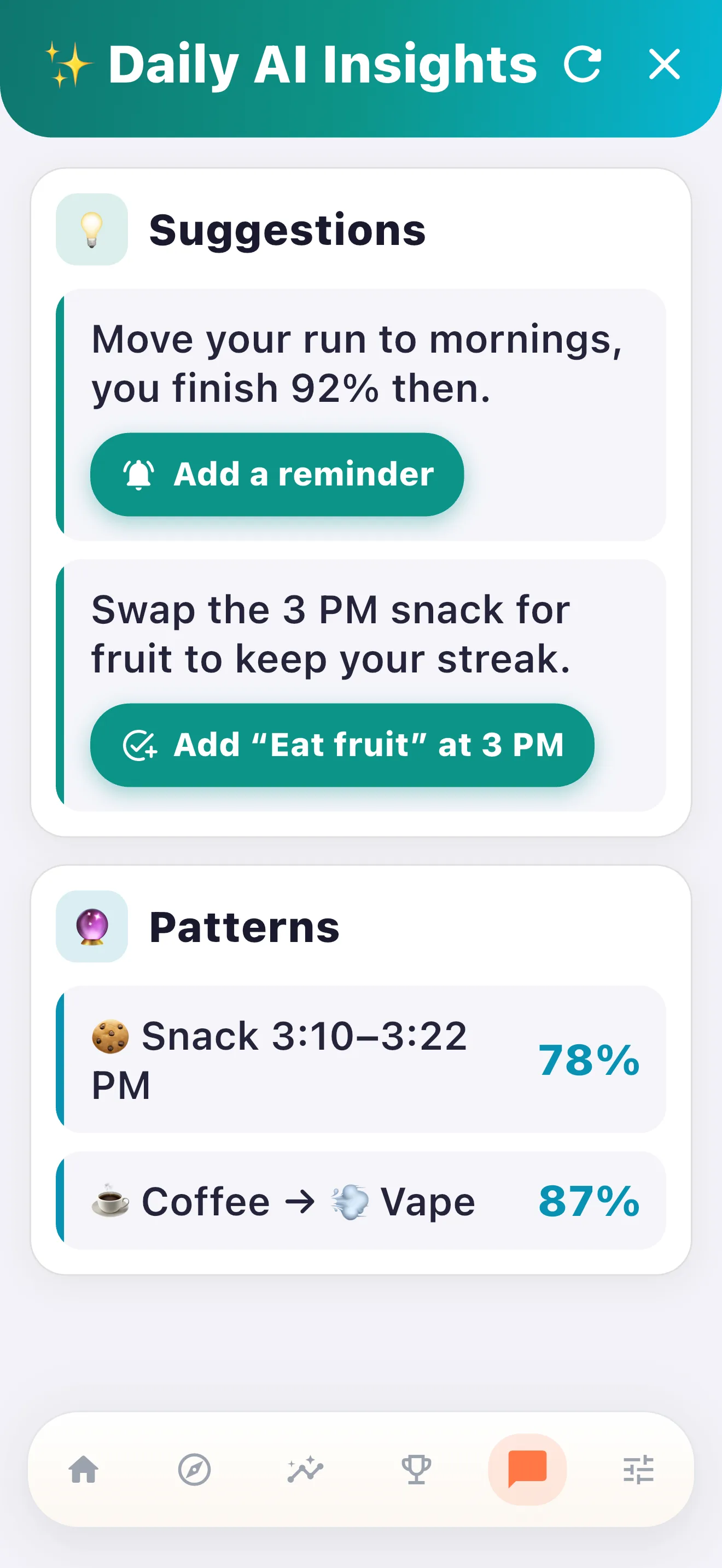
The metric is simple: home-cooked dinners per week. Track it weekly, not daily. The target ramps from 4 → 5 → 6 → 6-7 across the four weeks. After that, the floor is 5 (for busy weeks) and the ceiling is 7. Most weeks settle at 6. If you want the progression tracked automatically, a smart habit tracker like HabitIt auto-builds the weekly ramp so the target stays visible without you having to remember which week you're in.
This is the structural answer to how to cook at home more often - the ramp does the work that willpower kept failing to do. On the money side it compounds with the impulse spending plan, since takeout is one of the biggest impulse-spend categories, and on the food side it pairs with the quit junk food plan, because the two push in the same direction.
Common failures
The most common one is trying to learn 7 new recipes in week 1. You buy a cookbook, plan a week of ambitious variety, and hit fatigue by Wednesday. Start with 3 recipes you already know how to make. A close second is skipping the standing grocery list, which means the shopping decision restarts from zero every Sunday and the whole week's cooking hinges on how good that one tired Sunday decision was.
Some people refuse pre-prepared ingredients on principle and fail on principle. The artisanal bar already failed you once. Rotisserie chicken and frozen vegetables are how the plan survives a busy week, so use them.
Two smaller ones round it out. Quitting after one DoorDash night - one ordered dinner doesn't break the plan, the next night just resumes, and the restart logic applies. And not eating leftovers - cooking once and eating it twice doubles your home-meal count, so half the home meals can be last night's dinner and the plan involves less actual cooking than it sounds like.
Beyond the plan
The first 4 weeks install the rotation, and the next 60 days build the new identity. Around day 50 you'll notice you've stopped opening DoorDash on Tuesday evenings; the kitchen is just where dinner happens now. People who get there describe better energy (home meals tend to carry more protein and fiber than restaurant food), better sleep, and a food budget that finally stopped bleeding. The monthly savings compound into a yearly total that often rivals a real raise, just one nobody had to ask for.
The honest meta-point is that the whole plan is a decision-budget play. Once the three-default-recipes pattern is installed, the dinner question stops derailing your evening and the energy it used to eat goes somewhere more interesting. A solid morning routine and a default-dinner rotation quietly hold up a surprising number of adult lives for the same reason. HabitIt's smart habit tracker auto-builds the 4-week cook-at-home ramp and lets you log a home meal in one tap, so the plan stays on track even on the weeks when everything else is chaotic.
Build your cook at home plan today
Free 3-day trial of all features. After that the free tier covers the basic plan. No subscription required.


Get the Free Cook at Home Plan
Drop your email and we'll send a printable plan you can fill in and track. Occasional updates (max 1 per 2 weeks).
Success! Now check your email to confirm your subscription.
We respect your privacy. Unsubscribe at any time.