How to Quit Junk Food: A 30-Day Reset
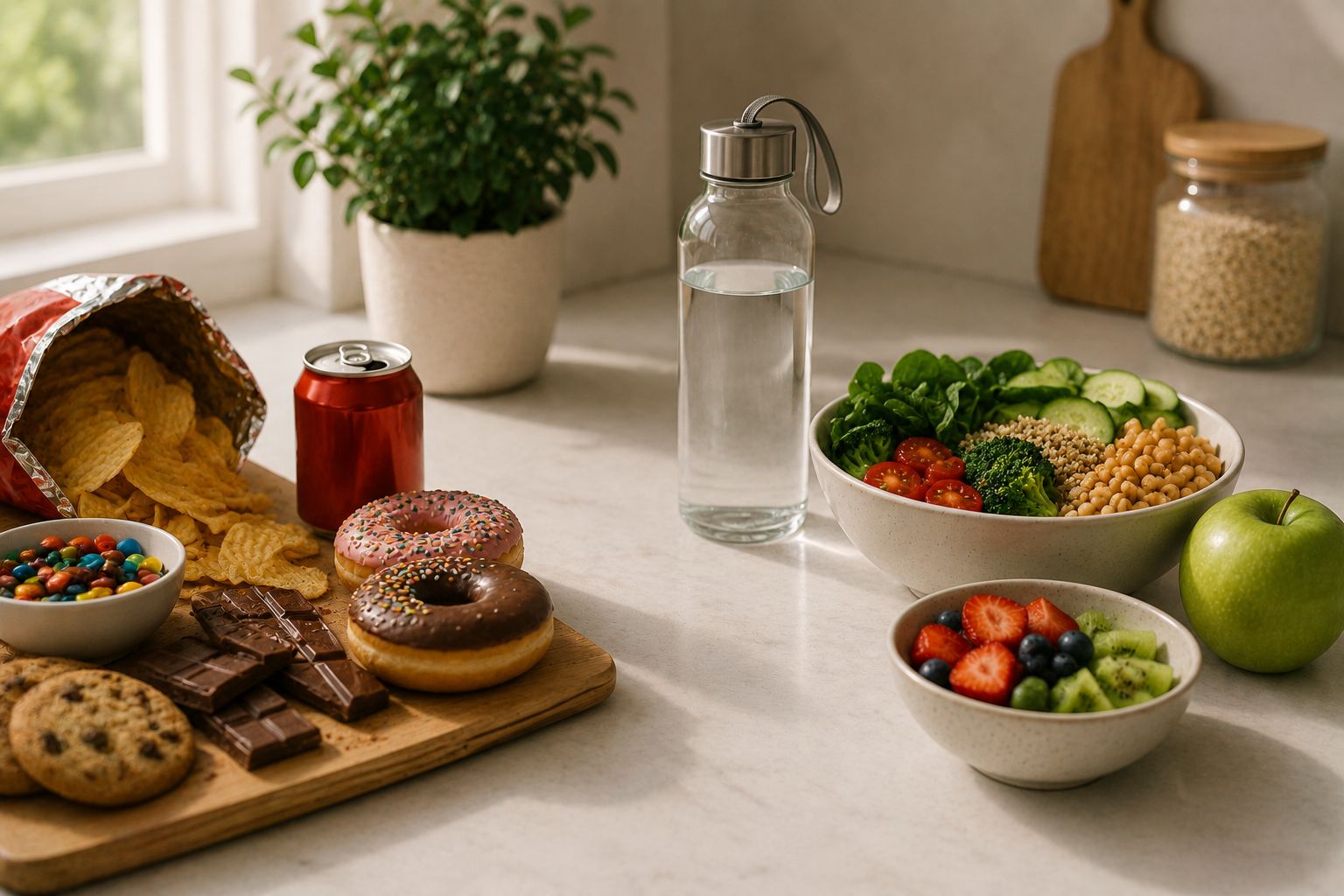
The reason your "no more junk food" Mondays don't survive Wednesday isn't your discipline. It's that the chips, cookies, and processed snacks are still in your kitchen. The willpower battle was won and lost at the grocery store on Saturday morning when you bought them. By Wednesday at 9pm you're tired and the chips are right there, and willpower is at its weekly low. This 30-day reset attacks the access problem before the willpower problem - audit the kitchen, empty it out on purpose, and rebuild the default around whole food so junk becomes the harder option to reach.
The pattern you already know
You decide on Sunday that you're going to eat better this week. Monday morning's smoothie goes well. Lunch is a salad. Dinner is grilled chicken. You're winning. Tuesday holds. Wednesday afternoon something breaks at work, you come home tired, and the bag of chips on the counter does the rest. Friday you're back to ordering pizza because the week already "broke." Sunday you resolve again. This loop is so universal that most diet advice quietly works around it, and most diet advice fails because of it.
The willpower-based model treats the chips on the counter as a test of your character. The structural model treats them as a stock problem. If the chips weren't there, the Wednesday-night collapse couldn't happen because there'd be nothing to collapse INTO. The fix has nothing to do with being stronger. It's making the default option whole food and the junk option something that requires leaving the house. The 30-day reset below does exactly that, which is why it tends to work for people who've already failed at willpower a few times over.
"Junk food" here means ultra-processed foods: chips, cookies, packaged sweets, frozen pizza, fast food, sweetened breakfast cereals, sugary drinks. Whole foods means fruits, vegetables, eggs, meat, fish, beans, oats, plain dairy, nuts. The line in between (a packaged whole-grain bread, a yogurt with some sugar) is fine in moderation; the reset focuses on cutting the ultra-processed end specifically. The sugar reduction plan handles the related but distinct sugar question; this post is about the broader category. If soda is a specific issue, the best apps to quit soda post covers trackers built for the sugar-plus-caffeine withdrawal combination.
Why "no more junk food" attempts collapse by week 2
Three reasons, in order:
1. The junk is still in the kitchen. This is the single load-bearing failure. Willpower rarely beats a bag of chips sitting three feet away when you're tired, and it doesn't need to win often to keep the pattern alive. Until the kitchen is emptied of the test items, no plan holds.
2. You skipped the audit. Most people don't really know what's processed in their own cabinet - granola gets filed as healthy, crackers as fine, frozen meals as just convenient. A 30-minute audit of every nutrition label usually turns up 6-10 ultra-processed items the person didn't think of as junk, and those do more damage than the obvious chips precisely because they're disguised as healthy.
3. The restock was "healthier" packaged food instead of actual whole food. Switching from Doritos to "veggie chips" is a sideways move at best - both are ultra-processed, with similar salt, oil, and calorie density. The pantry needs actual ingredients in it. Cooking at home more is the natural companion change.
The plan handles all three by force.
The 30-Day Plan
This assumes a baseline of about 7 junk-food meals or snack-occasions per week, one per day give or take. That's roughly in line with national data - CDC figures put ultra-processed food at about 53% of the average American adult's daily calories[1]. If you're at 14+ (multiple per day), run over 6 weeks. If you're at 2-3, the audit plus cabinet empty alone usually finish the job.
Take a phone picture of every shelf in your pantry and fridge. Then list every ultra-processed item you find, using the definition above as your yardstick. Most users turn up 15-25 items total, and a handful of those are usually things they never would have flagged as junk on their own - granola, "healthy" crackers, salad dressing, flavored yogurt. Cut consumption to 4 junk-food meals or snack-occasions this week. The cabinet stays as-is for week 1; you're just becoming aware of what's there and reducing usage. Track each junk-food moment honestly.
This is the single most important week. The cabinet gets emptied of everything the audit flagged. Food banks will take most unopened processed items if donating feels better than trashing them - either way, the loss is small next to what you get from clearing it out. Restock with the whole-food categories from earlier, whatever mix fits how you eat. The kitchen now needs more cooking but stops producing Wednesday-night chip moments. If cooking itself feels like the barrier, the cook-at-home plan runs in parallel to build three reliable default recipes. Junk-food occasions this week happen outside the home, restaurants or social events, capped at 2. Days one through five or six are the rough part. By day ten it stops feeling like a big deal.
By week 3 your taste buds have started recalibrating. Foods you used to find "fine" start tasting off - a bag of chips can taste almost painfully salty now, and a cookie's sweetness can cross into unpleasant. The single allowed junk-food occasion this week happens away from home, at a restaurant or someone else's place. The planning step (deciding Monday) prevents the impulse version that defines normal junk-food eating. The other 20 meals/snacks are from your whole-food restocked kitchen. Cravings drop sharply this week if the previous weeks held.
This is where things settle for good. Junk food is now an occasional thing, a real treat saved for a specific event. It's stopped being the gap-filler between meals or the reach on a bad Wednesday, because the access is gone and the desire has quieted down with it. Watch for the gradual restock this week: don't refill the chip shelf "just in case." The cabinet stays empty of test items indefinitely. Hold the rules at week 4 and the new default locks in on its own.
The Four Rules That Make It Stick
1. The cabinet doesn't get restocked, ever. Permanent rule. The kitchen is whole-food defaults from week 2 onward. If you want junk, you go get it from somewhere else. The 15-minute friction of leaving the house to buy chips kills most of the impulse purchases that would have happened instantly if they were already sitting in your pantry. Replacement habits apply to food the same way they apply to anything else.
2. The grocery list is where the real willpower battle happens. That decision gets made at the store on Saturday morning, long before the kitchen at 9pm on a Wednesday ever comes into it. Make the grocery list when you're well-fed and well-rested, with your willpower at its highest, and stick to that list once you're standing in the store. Sticking to the perimeter of the store and skipping the center aisles does most of the work on its own. Cooking at home more reinforces this from the meal-prep side.
3. Three real meals daily. Under-eating at meals drives junk-food cravings between meals. Three meals with protein + fat + fiber leaves the brain less compelled to seek junk between them. The stop-snacking plan covers this dynamic more fully; if your junk-food problem is mostly snacks, that plan is the right companion.
4. Plan the social-junk-food moment. The party, the office pizza day, the family barbecue. These will happen. The rule: junk-food occasions outside the home count toward the weekly cap but don't break the plan if you stay within it. Decide before the event what you'll eat and how much. Plan the choice; don't decide in the moment at the buffet.
Running the Plan With an App
You can run this on paper with a weekly tally of junk-food meals. The reason a smart habit tracker helps is that "junk food" is fuzzy enough to badly undercount without a daily log - the office cookies don't get counted, the gas station snack doesn't get counted, the late-night cereal doesn't get counted. Tap-to-log per occasion captures the data honestly.
Three things to look for in whatever you use. One, can you log junk-food meals/snacks with a clear weekly cap that steps down (4, 2, 1, 0-1)? Two, does it tolerate a slip without zeroing your streak? Three, can it remind you of the cabinet-stays-empty rule when you're at the grocery store?
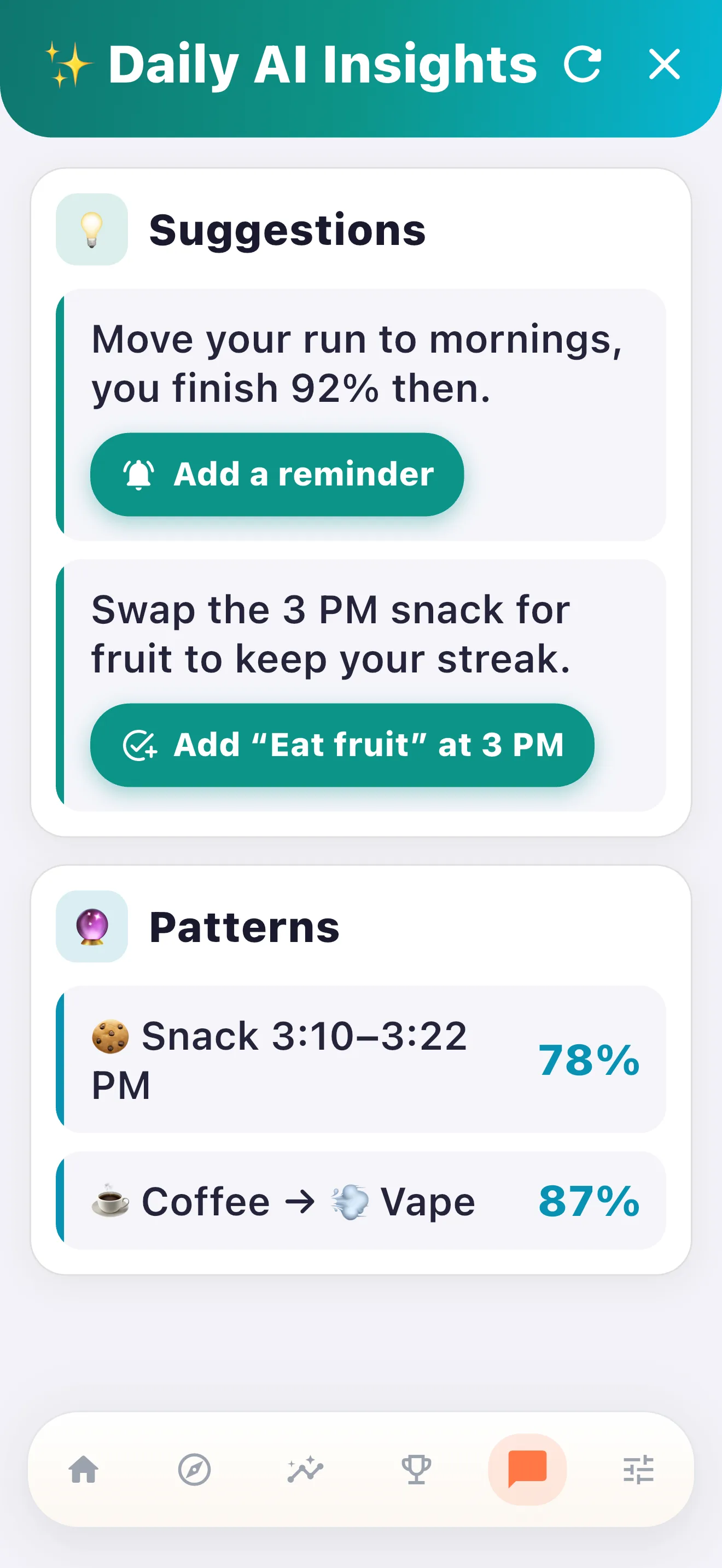
If you're searching for how to quit junk food, a 30 day junk food detox, or a junk food reset plan that holds up past week two, this kind of structured, access-first change is what HabitIt handles. You can build a quit junk food automatic habit plan in about ten seconds, free, no signup.
Five Ways the Plan Still Falls Apart
Keeping "just one bag" of chips for emergencies. The most common failure. Emergencies happen weekly. Every Wednesday becomes an emergency. The cabinet empty rule has no exceptions for week 2 onward. One bag = one weekly relapse.
Switching to "healthier" packaged food. Veggie chips, organic cookies, "natural" granola bars are all the same nutritional shape, the same ultra-processed category, wearing a nicer label. A real whole-food default means ingredients on the shelf, period.
Skipping the audit because "you know what's in your cabinet." Almost nobody really does. The audit reveals 5-8 hidden items consistently, and skipping it means the plan only ever addresses the obvious junk while a real chunk of the problem stays untouched.
Living with junk-food roommates or family. If others in the household keep the cabinet stocked, the access problem isn't solved. Two options: (a) negotiate a "junk-stays-in-their-private-shelf" rule, or (b) the plan focuses on YOUR consumption count, accepting access as a constant. Both work; assuming the rest of the household will join you doesn't.
Quitting after one bad day. You ate the work cookies. That's one slip. The next meal resumes the plan. The all-or-nothing reset is what kills most food-habit attempts. The restart logic applies the same way.
Beyond day 30
The first 30 days reset the access pattern. The next 30 build the new taste defaults. Around day 45-60 you'll notice junk food doesn't appeal the same way - the chips that used to be irresistible start tasting flat and overly salty. That's taste recalibration, not moral progress: taste buds adjust to whatever level of salt, sugar, and fat they're regularly exposed to, and dialing that exposure down for a couple of months shifts the baseline for real. Whole foods start tasting better in return, which is the long-term defense against the old pattern creeping back.
By month three, energy through the day tends to level out and sleep gets noticeably better. Midday cravings fade. A lot of people notice some gradual weight loss too, even without tracking a single calorie on purpose. The mechanism is straightforward - swapping ultra-processed meals for whole-food ones of similar volume trades low-satiety calories for higher protein and fiber, and the body just ends up less hungry overall. The cut sugar plan and the stop snacking plan are natural compound moves; running them sequentially is the right pace.
A note on the cost: people often assume eating whole foods is more expensive than eating junk, and the math usually says otherwise once you total up a real week. A cart full of cereal, frozen meals, chips, and snack crackers adds up fast at the register. A week of eggs, oats, chicken, vegetables, beans, and fruit tends to come in lower than that, mostly because you're skipping the packaging-and-marketing premium built into processed food. For anyone on a tight budget, the kitchen reset tends to be more affordable than it first looks - the real cost is time spent cooking, not extra money spent shopping.
Citations
- Centers for Disease Control and Prevention, National Center for Health Statistics, "Ultra-processed Food Consumption Among Adults, United States, August 2021-August 2023," NCHS Data Brief No. 536, 2025. cdc.gov
Build your quit junk food plan today
Free 3-day trial of all features. After that the free tier covers the basic taper. No subscription required.


Get the Free 30-Day Junk Food Reset
Drop your email and we'll send a printable plan you can fill in and track. Occasional updates (max 1 per 2 weeks).
Success! Now check your email to confirm your subscription.
We respect your privacy. Unsubscribe at any time.