How to Quit Soda: A 30-Day Taper Plan
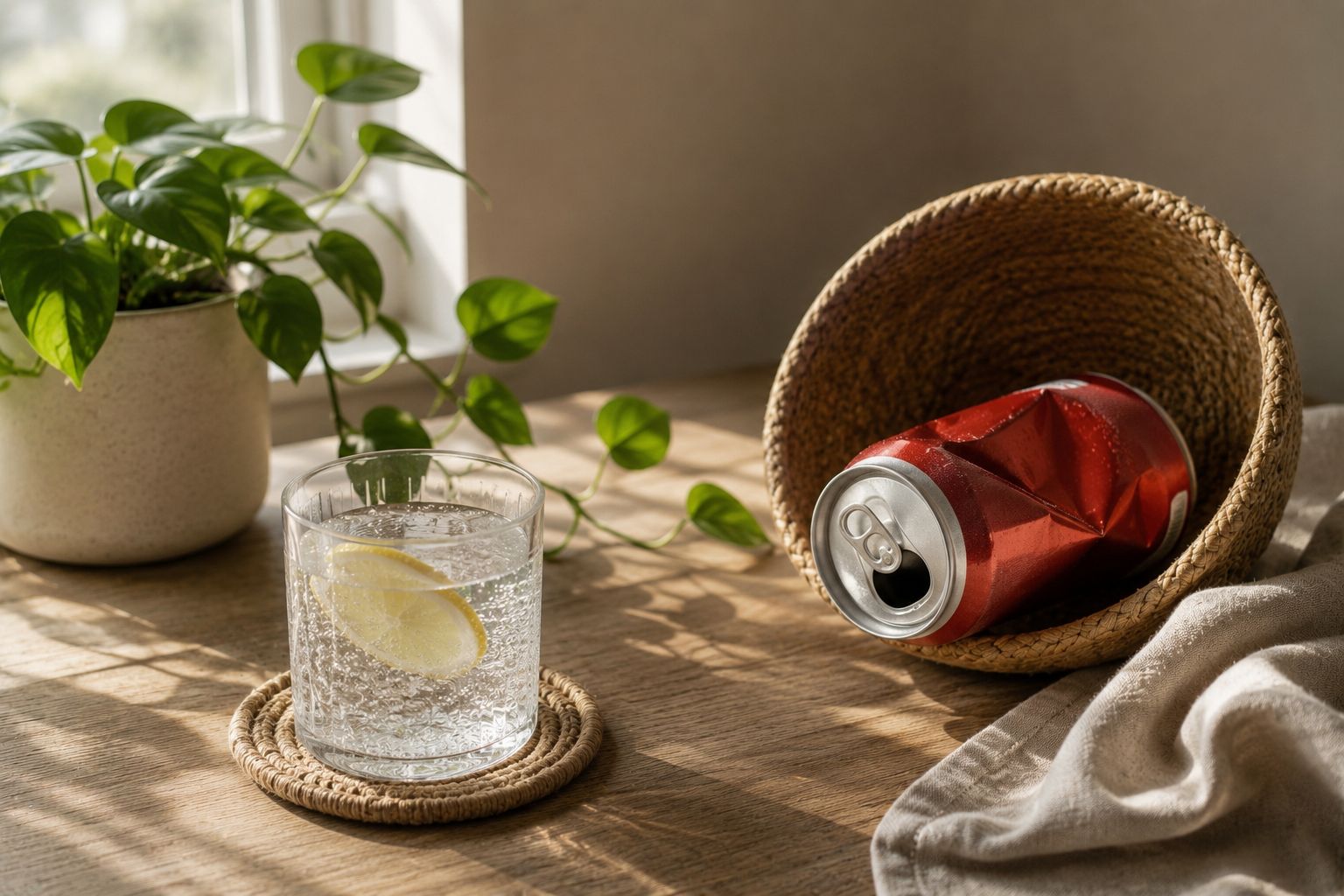
Sunday night you swore you were done with Coke. Monday morning that headache started small around 11am and was a real problem by 2pm. By 4pm you were at the gas station buying a bottle, "just one to fix this." That wasn't weakness. Soda cold turkey stacks a caffeine dependence and a sugar crash into the same Monday, on top of a can-in-hand habit that has nothing to do with either one. A 30-day taper takes those apart and handles them one at a time. The plan below gets you from three cans a day to zero without that Monday ever happening, and without the week-4 binge that usually undoes people who tried going straight to zero. A smart habit tracker with an automatic daily plan runs the taper so you only ever check today's target.
The pattern you already know
You've been drinking soda for years. Probably with lunch, probably with dinner, probably at least one more during the afternoon slump. Three cans a day works out to roughly 100 grams of sugar and 100 mg of caffeine, plus about 450 calories of liquid you don't experience as a meal. You've tried to quit before. The attempts that lasted a few days all collapsed the same way. A brutal headache hit around day 2-3 and meals started feeling like something was missing. Then came the first "just one," and the whole project unraveled from there. The relapse wasn't the failure; the cold-turkey-without-replacement was.
The reason cold turkey fails on soda specifically is that you're trying to quit three different things at once. Caffeine withdrawal alone produces a real headache for a day or two. On top of that, cutting the sugar abruptly tends to bring several days of cravings and a mood dip for a lot of people. And underneath both of those, the carbonation-and-can ritual is its own low-grade tactile habit running in the background of every meal. Stack all three into Monday morning and you've built a week 1 that nobody white-knuckles through. Taper each driver separately instead, and no single day asks for more than your normal willpower.
This post is the taper. You're not trying to swear off carbonated drinks forever; you're trying to break the daily soda habit specifically. The end state is sparkling water or unsweetened seltzer as your default drink, with the option of an occasional soda treat later that doesn't pull you back into the daily pattern. This is the same shape as the cut sugar plan and the caffeine taper, with the carbonation-ritual piece layered on top.
Why cold-turkey soda quits collapse by day 4
The caffeine headache wrecks day 2-3 first. Regular cola runs 30-70mg of caffeine per can depending on the brand, so three cans a day puts you at 90-200mg. Drop that to zero overnight and you get the same headache as a cold-turkey coffee quit, and reaching for "just one Coke" is faster than waiting it out, which is exactly where most cold-turkey attempts fall apart. A taper spreads the caffeine drop across the week so the headache barely registers.
Underneath that, the sugar crash changes what you crave. Three cans of regular soda is 100+ grams of sugar, and pulling all of it at once does more than cut calories - hunger signals shift and mood can dip for a few days, with cravings for other sugary food spiking right alongside as the body adjusts. Quit cold turkey and you'll often end up quietly swapping soda for sugary snacks during week 1, landing at roughly the same total sugar intake from worse sources. A slower reduction keeps the cravings small enough to manage. If sugar from non-soda sources is the bigger pattern for you, these 5 ways to cut sugar cover the swap moves directly.
And running under both of those is the can-in-hand ritual, which has nothing to do with caffeine or sugar at all. The mealtime can is half ritual and half consumption. Drop it and leave nothing in its place, and that tactile gap gets filled by something else, usually more food. Sparkling water from day 1 keeps the ritual intact, the fizz and the cold can still there at the same point in the meal - only what's inside actually changes.
The plan below handles all three at once, tapering each driver in parallel so you're never fighting all of them in the same week.
The 30-Day Plan
This assumes a baseline of 3 cans of regular soda per day, which is roughly the heavy-user pattern. If you're at 1-2 cans, you can run the plan over 2-3 weeks and skip ahead to week 2 or 3 as your starting point. If you're at 6+, run it over 6-8 weeks instead and drop more aggressively early. Diet soda follows the same plan minus the sugar driver; the caffeine and ritual still apply.
If you've been having Coke at lunch and dinner, plus another during the 3pm slump, kill the afternoon one first - it's usually the one you're least attached to. In its place: any sparkling water you like, at that same 3pm slot. The carbonation handles roughly half the craving the can would have handled. You're still at two cans of soda a day, so the caffeine reduction is small enough that the headache stays manageable. Stock the sparkling water visibly so reaching for it is as low-friction as reaching for soda used to be.
If you started at 3, you're now at 1 can a day plus 2 sparkling waters in the slots that used to be soda. The caffeine reduction is now significant enough that days 8-10 will produce a real headache; this is the unavoidable taper-down moment. Hydrate heavily with actual water on top of the sparkling stuff, and get real sleep if you can. The temptation is to have "just one extra" to fix the headache - resist it. The headache fades within 36 hours of starting. The single allowed daily can stays at your highest-emotional-attachment time slot (usually with dinner). Sugar cravings start to drop noticeably toward the end of this week as your taste buds adjust.
Down to roughly 3-4 cans per week. By this point your taste buds have shifted enough that regular soda often tastes weirdly sweet, which is the taper working as designed. Sparkling water with a squeeze of lime fills the can-in-hand ritual better than plain sparkling water (the citrus adds a flavor signal that the brain reads as "real drink"). The headache is gone. Energy is more stable. You'll start to notice you're less hungry at meals, which is the sugar-baseline normalizing. Cravings drop sharply this week if you've been holding the plan.
This is where it settles for good. The mealtime drink is now sparkling water or unsweetened seltzer, and there's no "missing" feeling because the carbonation-and-can ritual never went away. The thing to watch this week is the false-confidence trap. You feel fine and the cravings have gone quiet. Then you're at a friend's house grabbing a Coke "because it's there." That single can typically resets you to about week 2 by triggering the sugar and caffeine response together. Hold the zero for the full week and the urge to "just one" fades by day 30.
The Four Rules That Make It Stick
1. The sparkling water is the whole plan, not a nice add-on. This is the same gap-filling problem from the can-in-hand point above - skip the swap and something else fills it, usually food. Keep the sparkling water in the fridge from day 1, visible, treated as the same "drink with the meal" the soda used to be. Failed soda quits skip this step constantly. Replacement habits are the mechanism underneath most of this.
2. The caffeine headache means the plan is working. You already know this one from week 2 - same day 8-10 headache, still just the brain unwinding its caffeine dependence. Read it as "I need a Coke" and you'll relapse right there. Ride out the 36 hours and it passes on its own. The day-4 wall runs on the same logic - the bad day is the recovery happening.
3. Wait until week 3 to remove the supply. Throwing all the soda away on day 1 is dramatic but makes the first two weeks harder than they need to be - you'd be fighting the taper and the lack of access at the same time. Keep the usual supply through week 2 and let the count alone do the work. At the start of week 3, donate or pour out what's left; by then your daily count is low enough that removing access feels like a relief.
4. Plan for the social-soda moment. Sooner or later it's a friend's barbecue or a company pizza day, the kind of party where everyone around you has a Coke in hand. These will happen. The rule: at social events, drink sparkling water from a can. Topo Chico works well for this - it looks and holds like a regular can, so nobody tries to "fix" your drink by handing you a Coke. The visible-can effect matters more than the actual contents.
Running the day-by-day habit plan with an app
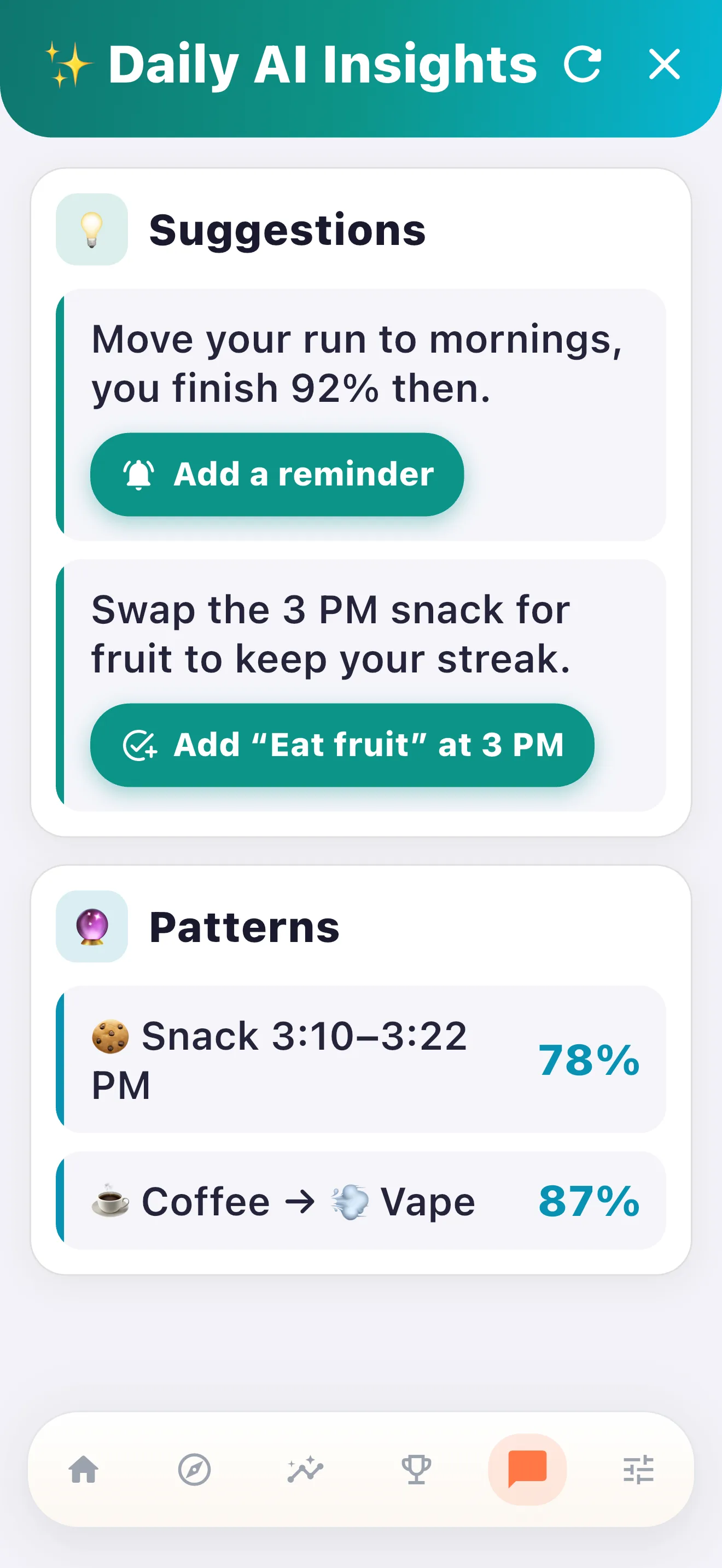
You can run this on paper with a daily tally. The reason paper soda-quits often collapse is that the user isn't physically marking each can, so the actual count slides upward without notice. By Friday "I had one earlier" turns out to have been three. An AI habit tracker forces honest daily logging because each tap is small and immediate, and the weekly graph makes the trend visible.
A few things matter more than others in whatever you use. It needs a clear weekly cap that steps down - 3, 2, 1, 0. It should shrug off a slip without zeroing the streak, since a punish-tracker is exactly what turns a slip into a relapse. And a reminder at the times you'd normally reach for soda goes a long way.
Whether you got here searching for how to quit soda or just a 30-day no-soda plan that handles caffeine and sugar together, this kind of multi-driver taper is exactly what HabitIt was designed to run. You can build a quit soda habit tracking plan in about ten seconds, free, no signup.
Five Ways the Quit Still Falls Apart
Skipping the sparkling water and just removing the soda. This is the most common failure by far, and it's the same gap-filling problem covered above - it just doesn't announce itself until the deprivation has already broken the plan by week 2.
Switching to diet soda as the "taper." Diet soda removes the sugar but keeps the caffeine and the artificial-sweetener taste-trigger that maintains the daily ritual. A lot of people who switch to diet are drinking the exact same number of cans a year later. If you want to quit soda, taper toward sparkling water.
Quitting in summer. Hot weather drives soda consumption and the cold-can-on-a-hot-day association is real. December and January end up being the easiest window, since the ritual is tied to warm-weather contexts in the first place. If you're starting in July, expect more friction and build a stronger replacement (Topo Chico over a glass with ice handles the heat-day ritual better than canned LaCroix).
Treating one slip as a relapse. You had a Coke at the wedding. That's one can. Don't restart your count from zero or declare the plan dead - the next day you just go back to your taper target. The restart logic applies here: slips happen, and it's the next decision that closes the gap.
Not telling anyone. Quitting soda doesn't usually need accountability the way quitting nicotine does, but telling one person at home (partner, roommate) prevents the "I picked up Coke from the store" surprise that derails week 2.
Beyond day 30
The first 30 days handle the chemistry and the ritual. The next 30 build the identity. Around day 50 you'll notice you've stopped thinking of yourself as "a soda person." The sparkling water is just what you drink. Old patterns like reaching for a Coke at the gas station fade because the dopamine reinforcement stops. Energy steadies out and the midday crash mostly disappears. Some gradual weight loss tends to follow too, just from cutting that much liquid sugar out of the day.
The deeper payoff shows up around month three, when you have a soda again at some social event and it tastes shockingly sweet. That's the taste-bud recalibration the 30 days built, and it's what guards against the old habit creeping back. Once soda tastes like syrup, picking it up daily again just feels wrong on a physical level, no moralizing required. If you want to layer this with broader sugar reduction, the cut sugar post is the next move, same shape applied to the rest of your sugar sources.
Build your quit soda plan today
Free 3-day trial of all features. After that the free tier covers the basic taper. No subscription required.


Get the Free 30-Day Quit Soda Plan
Drop your email and we'll send a printable plan you can fill in and track. Occasional updates (max 1 per 2 weeks).
Success! Now check your email to confirm your subscription.
We respect your privacy. Unsubscribe at any time.